

Choosing a cooling system is one of the larger decisions a homeowner makes, and it is not one most people make often. In Durham, the system will run from April into October, so the fit matters on every bill for fifteen years. This post walks through the options we install in Triangle homes, what each does well, and where each falls short. It ends with a few questions that narrow the choice quickly.
Central air conditioning
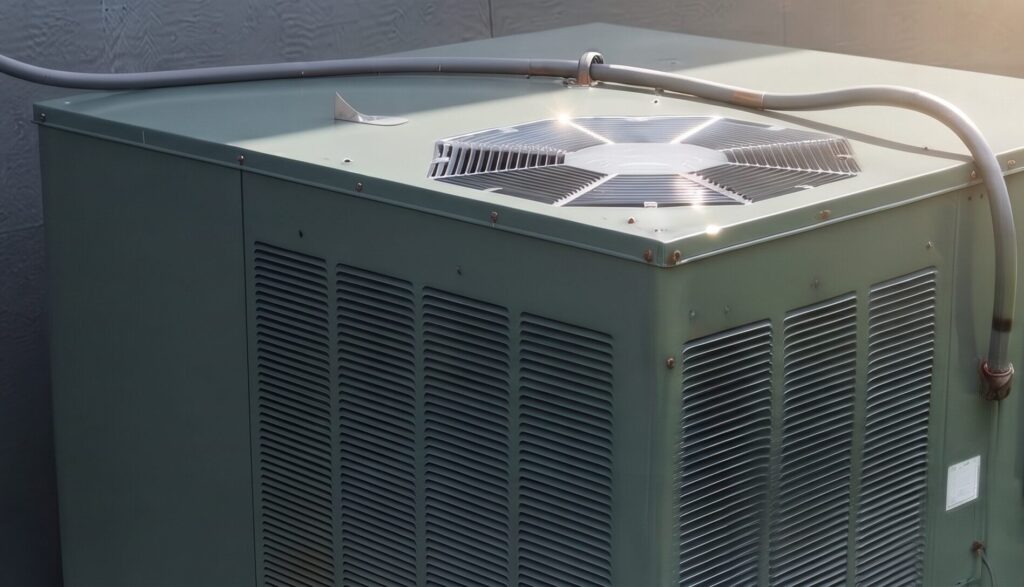
A central air conditioner is a split system: an outdoor unit with the compressor, an indoor coil and blower, and ductwork carrying cooled air to every room. It pairs with a separate heating source, usually a gas furnace, and it remains the standard for homes that already have sound ductwork and gas service. It cools evenly, dehumidifies well when it is sized correctly, and comes in a wide range of efficiency levels. Its one limit is that it only cools, and in an older home with leaky ducts, a new system will not perform to its rating until the ducts are addressed. Our air conditioning page covers the current options.
Heat pumps
A heat pump works like a central air conditioner in summer and reverses in winter to heat the house by pulling warmth from the outdoor air. That makes it one system for both seasons, and it is a natural fit for the many Triangle homes without natural gas service. Durham winters are cold enough that a heat pump leans on its electric auxiliary heat strips on the coldest nights, which is the trade-off to know about, since the strips are the expensive part of heat pump heating. Modern variable-speed heat pumps dehumidify noticeably better than the single-stage units they replace, which matters in our summers.
Dual fuel systems
Dual fuel pairs a heat pump with a gas furnace and lets the controls pick whichever is more efficient at the moment. The heat pump handles the mild days, which is a good share of a Triangle winter, and the furnace takes over when temperatures drop into the 30s and the heat pump would otherwise be running its strips. In summer it cools like any heat pump. It costs more than either system alone, and it only makes sense in a home with gas service, but for those homes a dual fuel system is often the most comfortable way to heat and cool here.
Gas packs
A gas pack puts the cooling components and a gas furnace in one cabinet outside the house, with ducts connecting it to the rooms. Packaged systems are common across the Southeast because so many homes have no basement and limited attic space for an indoor air handler. They cost less to install than a split system in many homes and are simple to service, since everything is in one place. The trade-off is efficiency; packaged units generally top out below the highest-efficiency split systems. If your home already has a gas pack, replacing it with another is usually the practical path.
Zoning
Zoning is not a different kind of system but a way of controlling one. Motorized dampers in the ductwork and a thermostat in each zone let the upstairs and downstairs, or the bedrooms and the living areas, run at different temperatures. Two-story Triangle homes are the classic case: the upstairs bakes in July while the downstairs is comfortable, and the usual fix, setting the thermostat lower, makes the downstairs cold and the bill high. HVAC zoning solves that without a second system, and it works best when planned alongside a replacement.
Ductless mini-splits
A ductless mini-split has an outdoor unit and one or more indoor units mounted on walls or ceilings, connected by refrigerant lines instead of ducts. Each indoor unit cools its own space with its own thermostat. Mini-splits are the answer for the rooms a central system never quite reaches: the bonus room over the garage, a sunroom, a converted attic, a home office, or an addition. They are also a whole-house option for older Durham homes without ductwork, where adding ducts would mean opening walls. They are efficient and quiet and heat as well as cool. The trade-offs are the cost when several zones are needed and the indoor units on the wall, which not everyone loves. A ductless mini-split is rarely the whole answer for a large house, but it solves a hot room better than anything else we install.
Three questions that narrow the choice
- Do you have natural gas service. If yes, a furnace, a gas pack, or dual fuel is on the table. If no, a heat pump is usually the answer.
- Is your ductwork sound. If yes, any central system will work. If there is none, or it is beyond repair, mini-splits move to the front.
- Is there a room or a floor the current system cannot handle. If yes, zoning or a mini-split for that space belongs in the plan regardless of what cools the rest of the house.
Beyond those, efficiency is worth paying for in a climate where the system runs half the year, and sizing is worth getting right, because an oversized system in a humid place short cycles and leaves the house clammy. A proper load calculation, which measures the home rather than guessing from square footage, is part of every replacement estimate we provide.
Let us walk through it with you
Happy Home Services has been Durham’s trusted heating and air experts since 1955. If you are replacing a system or adding cooling to a space that never had it, schedule online or reach us 24/7 by phone or website chat for an in-home consultation. We will measure the home, look at the ductwork and gas supply, and give you a firm price with honest, upfront pricing with a 100% money-back guarantee. Financing plans for cooling are available.