
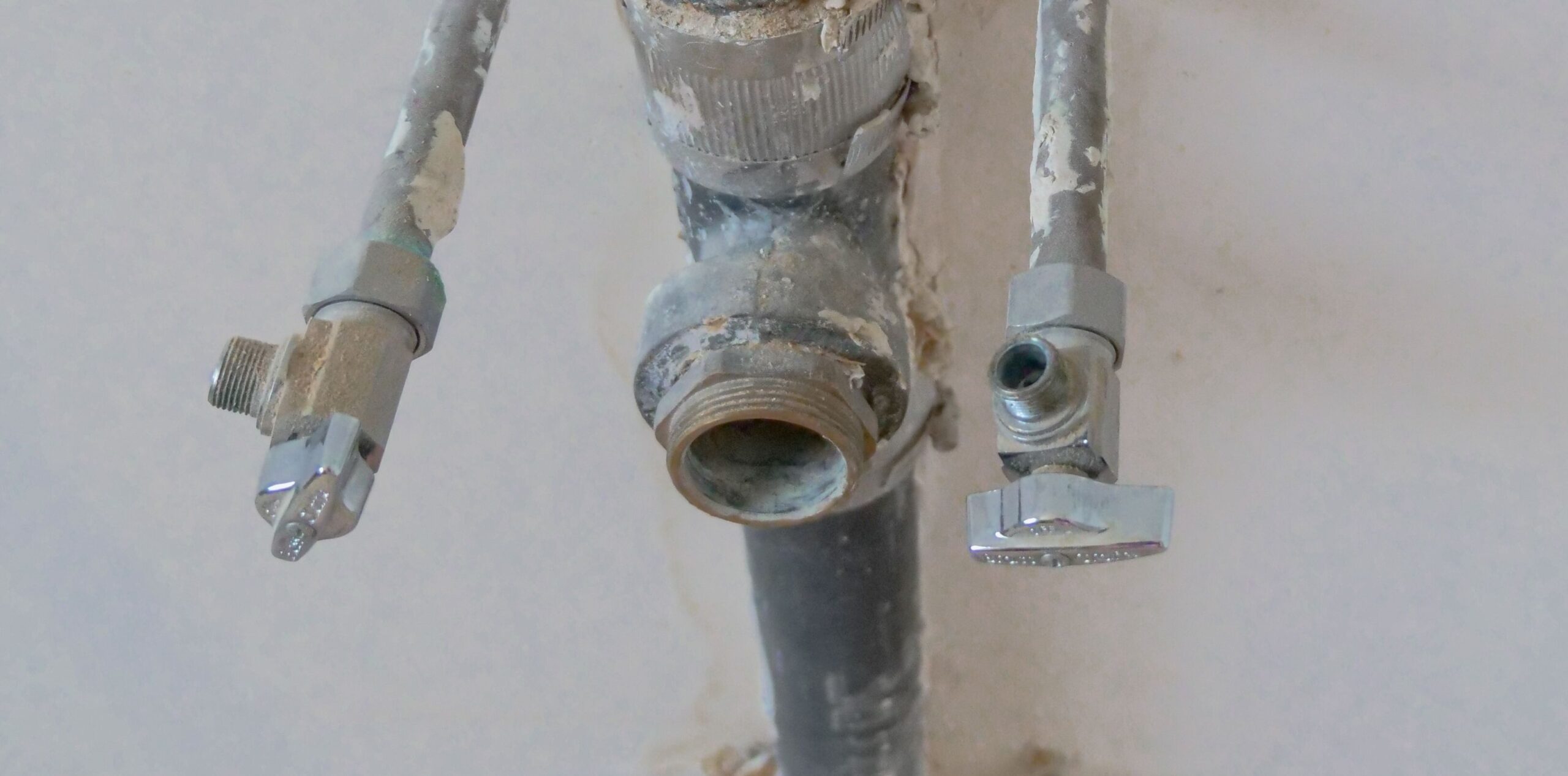
Pipes last a long time, which is why so few of us know how old ours are or what they are made of. They were installed once, decades ago, and have been out of sight since. Every pipe material has a service life, though, and a house approaching the end of it gives signs that are easy to mistake for something else. This post explains how to find out what is in your walls and how long each material typically lasts. It then covers what an aging system looks like and how to think about repair versus repiping for when you’re at that crossroad.
How to tell what your pipes are made of
The easiest places to see supply pipe are where it enters the house near the main shutoff, under the sinks, and in the crawl space. A few minutes with a flashlight usually answers the question.
- Copper is a dull orange or brown metal, often with green or white crust at older joints.
- Galvanized steel is gray, threaded at the joints, and tends to show rust at the fittings.
- CPVC is cream or tan rigid plastic.
- PEX is a flexible plastic, typically red, blue, or white.
- Polybutylene is gray flexible plastic with copper or plastic fittings, and it is the one to take seriously, for reasons below.
- Drain lines are white PVC, black ABS, or, in older homes, heavy dark cast iron with rust at the joints.
How long each material lasts
Copper supply lines last 50 to 70 years or more, though aggressive water and old workmanship can shorten that, and pinhole leaks are the usual way they fail. Galvanized steel, common in homes built before the 1960s, lasts 40 to 60 years and fails from the inside as corrosion narrows the pipe, which is why old galvanized systems have low pressure and rusty water at the same time. CPVC and PEX are expected to last 50 years or more, though PEX has not been in homes long enough to prove it. Cast iron drain lines last 50 to 100 years and corrode from the bottom, where wastewater sits. A properly installed PVC drain will outlast most other materials in the house.
Polybutylene and the Triangle
Polybutylene was installed widely across the Southeast between 1978 and 1995, and the Triangle added a great many homes in those years. If your home was built in that window, there is a fair chance the gray pipe is in it. The material reacts with chlorine in treated water and becomes brittle from the inside, then fails at fittings and along the pipe without warning. Aging polybutylene cannot be repaired, only replaced, and many insurers decline to write or renew a policy on a home that still has it. Finding gray flexible pipe in your home is not cause for alarm, but it is cause for a call, and we are glad to walk you through the options.
What an aging system looks like
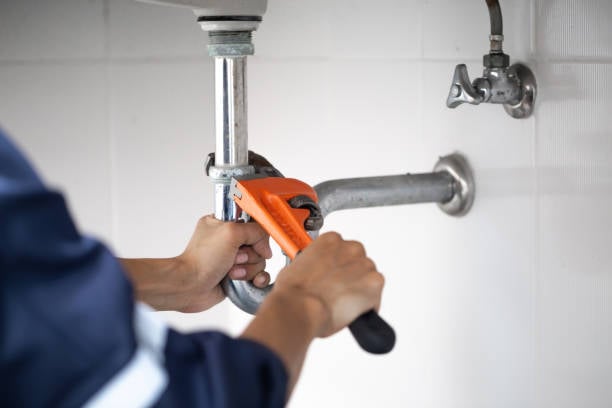
The signs arrive in a pattern regardless of material. Leaks begin to show up in different places rather than one, because the whole system is aging together and a repair in one spot puts pressure on the next weak one. Water pressure has drifted down over the years. Water runs rusty first thing in the morning. Visible pipe in the crawl space shows crust or rust at the joints. Taken together, the repair bills have started to add up. In homes with cast iron drains, add recurring clogs, a persistent sewer smell, or a soft spot in a floor above a drain line. Any two of these together are a reason to have the whole system evaluated rather than fixing the next leak on its own.
The rest of the system ages too
Pipes are not the only parts with a lifespan, and a plumbing inspection looks at all of them. The shutoff valves under sinks and behind toilets tend to seize after 10 to 15 years without being turned. Rubber supply hoses on washing machines and dishwashers should be replaced every five years or so. The pressure regulator at the main lasts 10 to 15 years, and when one fails, pressure can climb high enough to stress every joint in an aging system. For homes on wells, the pump and the pressure tank each last 10 to 15 years, and a well pump that is working harder than it used to is telling you where it stands. A tank water heater lasts 8 to 12 years.
Repair or repipe
The decision comes down to how many more repairs the system has in it. One pinhole in 30-year-old copper is a repair. The third leak in two years in 55-year-old galvanized steel is a repipe, because each repair is buying a few months on a system that will keep failing, and each failure risks water damage that costs more than the pipe. We can help you make the call with a pressure test and a look at the exposed pipe, and for drain lines a camera inspection shows the pipe’s condition from the inside. Whole-home repiping sounds disruptive, and it is a sizable project, but PEX can be run through existing walls with less opening than people expect, and it usually takes days rather than weeks. Financing options are available.
Plan it rather than react to it
Happy Home Services has served the Triangle since 1955 with honest, upfront pricing with a 100% money-back guarantee. If your home is more than 30 years old and its plumbing has never been evaluated, or if you have found gray flexible pipe, reach us 24/7 by phone or website chat. We will identify what you have, tell you its condition, and lay out a plan with prices, so that when the plumbing reaches its milestone, you are the one who decides when.