

Water heaters work every day and get noticed almost never, right up until the shower runs cold or the floor is wet. The encouraging part is that they give warning first, and the warnings are easy to read once you know them. This post covers how to find your heater’s age and what the common signs mean. It also covers the local factors that wear a heater out faster, and how to decide between one more repair and a replacement on your own timeline.
Start with the age
Every water heater carries a label with a serial number, and the manufacture date is either printed outright or coded into the first few characters. A conventional tank heater, gas or electric, lasts about 8 to 12 years. A tankless unit lasts about 20 with regular maintenance. If your tank heater is past ten, everything below carries more weight, because the question shifts from whether it will fail to when, and whether you would rather choose the day.
What the heater is telling you
- Showers run short or the temperature swings. On a tank heater, sediment has usually built a layer on the bottom that the burner or lower element must heat through, which slows recovery and shrinks the usable capacity. On an electric unit, a failed lower element or a worn thermostat produces the same symptom.
- Rumbling, popping, or knocking while it heats. That is water boiling under the sediment layer. The sediment insulates the tank bottom, the steel overheats every cycle, and overheated steel eventually cracks.
- Rusty water from the hot taps only. The anode rod that protects the tank has been used up, and the tank itself has started to corrode. Replacing the rod on a younger heater buys years; on an older one, rust means a leak is coming.
- Moisture at the base. Sometimes the source is a fitting or the drain valve, and those can be repaired. Often it is the tank weeping through a hairline crack, and a tank that has begun to leak can only be replaced.
- Repairs are starting to add up. A heating element, then a thermostat, then a valve. Each is reasonable alone, but a heater past ten years on its third repair is being kept alive rather than fixed.
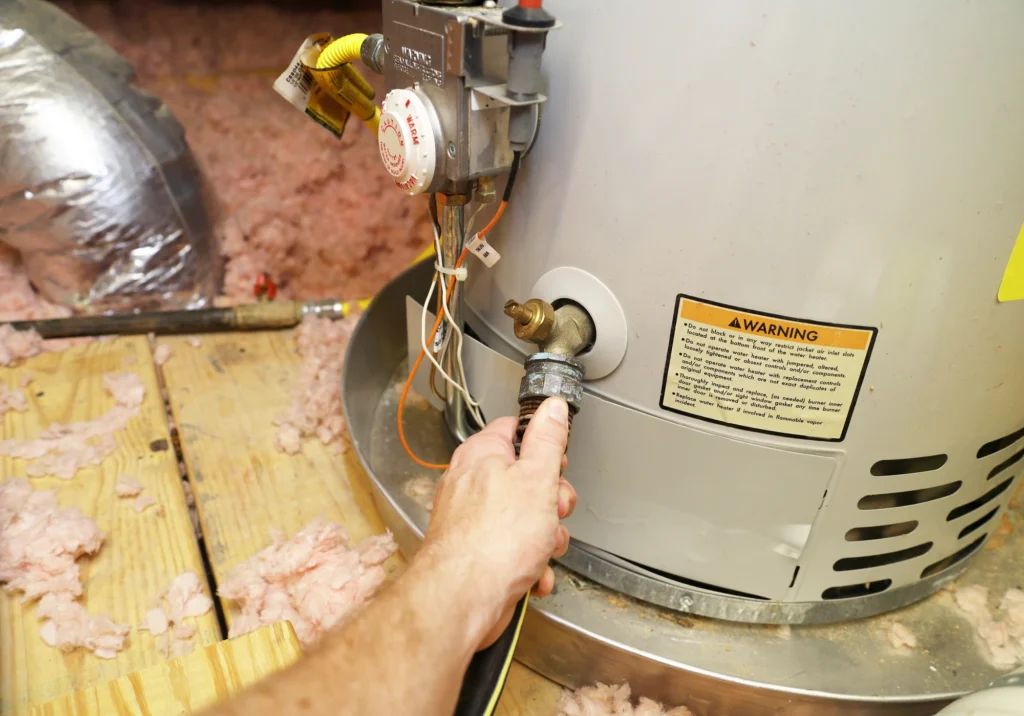
The Triangle factors that shorten a heater’s life
A few local conditions push water heaters here toward the early end of their range. Homes on well water often carry more minerals and iron into the tank, which means faster sediment buildup, and a water softener or treatment system protects the heater along with everything else downstream. Winter incoming water in Durham is cold enough that the heater works noticeably harder from December through February, which is when tired heaters tend to give out. And many Triangle water heaters sit in crawl spaces, garages, or attics, where a leak goes unnoticed longer and, in an attic, brings down a ceiling when the tank finally fails in worst case scenarios. If yours is in one of those places, the age matters twice over.
A simple way to decide
When a repair is needed, two questions settle it. Is the heater past ten years, and does the repair cost more than about half of what a new heater would. If the answer to either is yes, replacement is usually the better use of the money, and it comes with the relief of a fresh warranty and a tank that will not be on your mind. If the heater is younger and the repair is modest, a water heater repair visit, with a flush and an anode rod check while we are there, will often carry it comfortably for years.
Choosing what comes next
When the time comes, the choice is mostly between a new tank heater and a tankless unit. A tank heater costs less up front and is the simplest swap. A tankless unit heats water on demand, so it does not run out, takes up a fraction of the space, and lasts about twice as long. In the Triangle, a tankless unit needs to be sized for the cold incoming water of a January morning rather than an August one, which is a sizing question we are glad to walk through with you. A gas unit also needs a properly sized gas line and venting. Our tankless water heater page covers what is involved, and financing options are available for either type.
Let us check it before it decides for you
Happy Home Services has served the Triangle since 1955, and water heaters are one of the things we do most. If yours is past ten years or showing any of the signs above, reach us 24/7 by phone or website chat. We will check the age, the anode rod, the sediment, and the relief valve, and lay out repair and replacement options with honest, upfront pricing with a 100% money-back guarantee. Members of the Happy Home Service VIP Club receive up to 25 percent off repairs and a triple labor warranty on the work.