
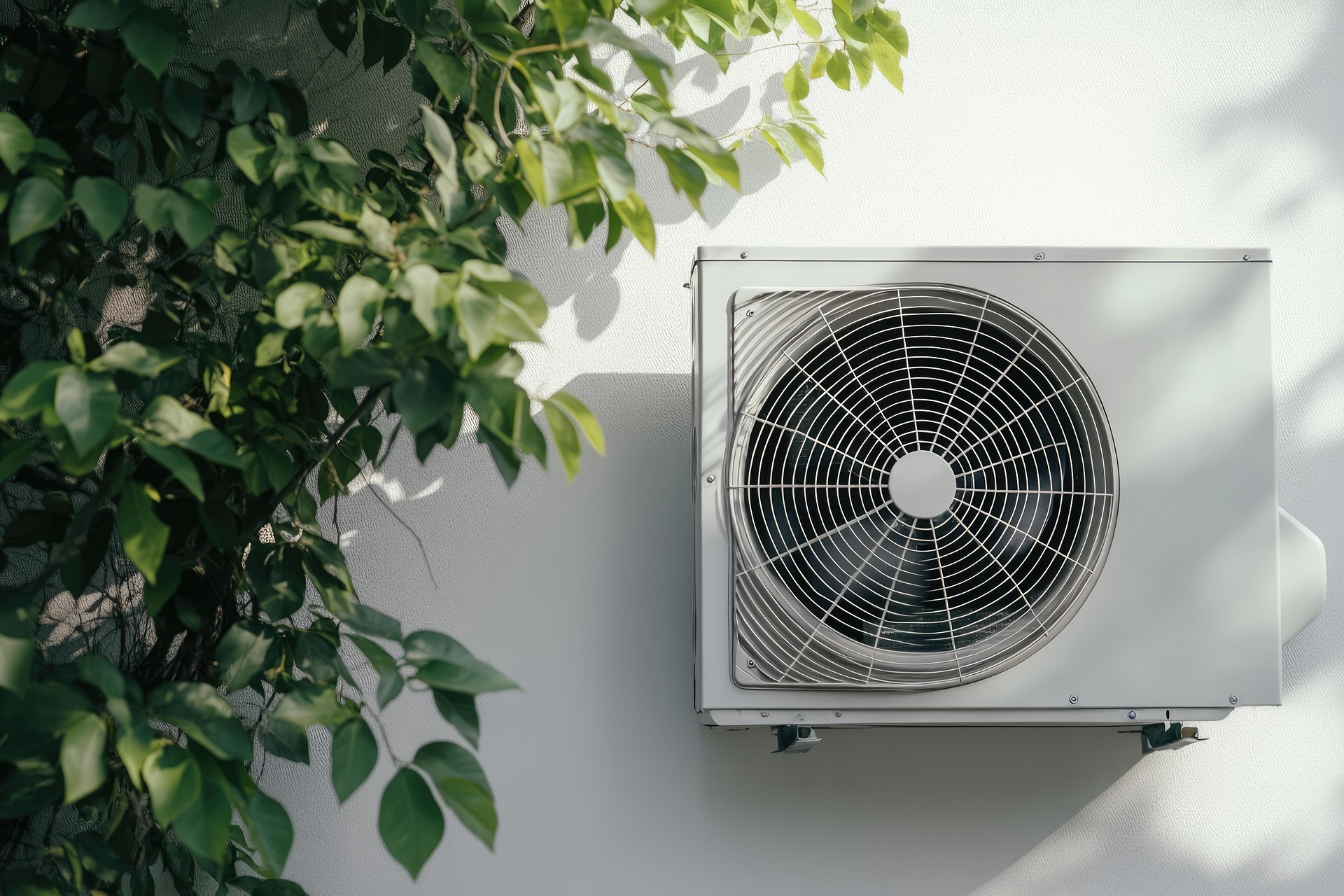
An air conditioner that stops on a July afternoon in Durham gets noticed fast. Before you call anyone, a few minutes at the thermostat, the breaker panel, and the outdoor unit are worth your time. A fair number of no-cooling calls turn out to be something simple. Find your symptom below, do the checks, and you will either have your cooling back or a clear idea of what the technician will be looking for.
Start with these, whatever the symptom
- The thermostat is set to cool, the set point is below the room temperature, and the fan is on auto rather than on.
- The filter is clean. A clogged one starves the system of air and causes several of the problems below.
- The breaker for the air conditioner and the air handler is on. Reset a tripped one once; if it trips again, leave it off and give us a call.
- The outdoor unit is clear of pine straw, grass clippings, and shrubs, and in spring, rinsed of the pollen that coats Triangle coils yellow.
- The disconnect box on the wall near the outdoor unit is in place. It sometimes gets pulled during yard work.
It runs, but the air is not cold
If the checks above did not help, the usual causes are a low refrigerant charge from a leak, a dirty indoor or outdoor coil, a failing compressor, or a duct that came apart in the attic and is sending cooled air into 130-degree space. Each of these is something we measure rather than guess at. Refrigerant pressures, coil condition, and duct pressure tell the story in a few minutes, and the repair follows from what the numbers say.
Nothing happens at all
A system that is completely dead is often a power problem rather than an equipment problem, which is why the breaker and disconnect are on the list above. If those are fine, look at the indoor unit for a float switch, a small device on the condensate line that shuts the system off when the drain backs up. If the drain pan has water in it, that switch is why the system is off, and clearing the drain is the fix. Beyond that, a dead system points to a failed capacitor, contactor, transformer, or control board, all of which are routine air conditioning repairs.
The outdoor unit hums or clicks, but the fan does not turn
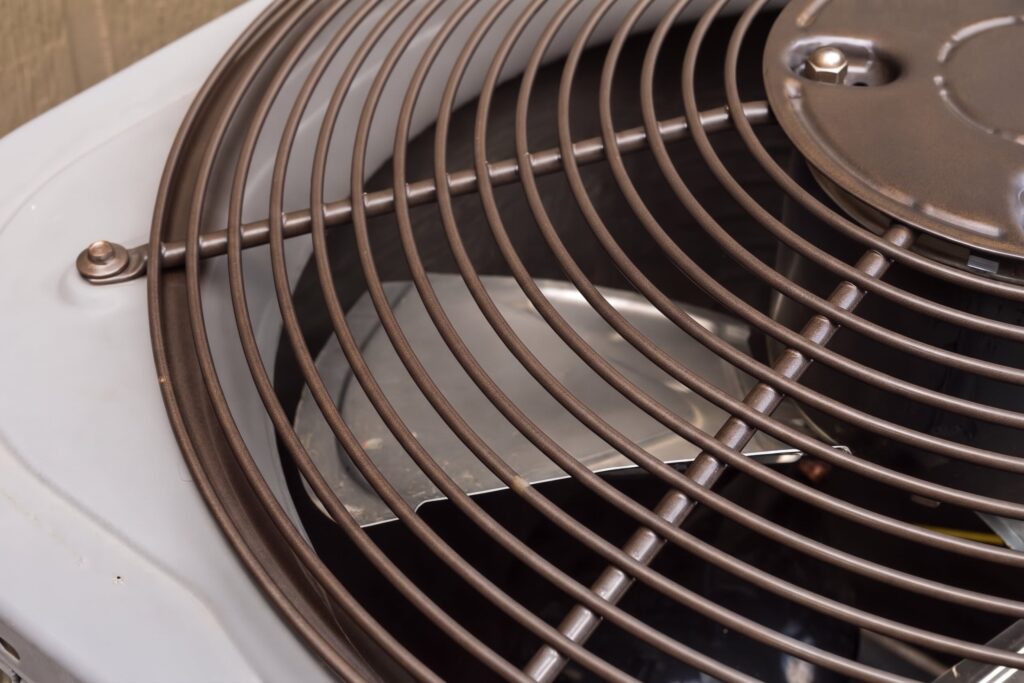
A humming unit with a still fan is almost always a failed capacitor, the small cylinder that gives the motors their starting push. Please do not try to start the fan by hand with a stick; the compressor is straining against the same weak part and can be damaged if it keeps trying. Turn the system off at the thermostat to protect the compressor and let us know. A repeated loud click with no start is usually the contactor. Both are inexpensive parts, and both turn into a compressor if they are ignored (which is a much more expensive component.)
There is ice on the lines or the indoor coil
Ice on a cooling system in July is common and always means the indoor coil got cold enough to freeze the moisture in the air. Restricted airflow from a dirty filter and a low refrigerant charge are the two usual reasons. Turn the system off and let the ice melt completely, which can take a few hours, then replace the filter and try again. If the ice comes back, the cause is refrigerant or the coil, and it needs a technician. Running the system while it is iced pushes liquid refrigerant into the compressor, which is the one thing you want to avoid.
There is water around the indoor unit
Air conditioning pulls gallons of water out of Triangle air every day, and all of it leaves through a small condensate line that clogs with algae over a wet season. Water in the pan, water on the floor, or a stain on the ceiling below an attic unit means the line is blocked or the pan has cracked. If the system is still running, please shut it off before the water reaches the ceiling. Clearing the line is a routine service item, and a float switch, if the system does not have one, keeps the next clog from becoming a drywall repair.
It runs all afternoon and never catches up
On a 97-degree afternoon, an air conditioner running without a break is not necessarily broken. Systems here are sized for design conditions in the low to mid 90s, and above that they run continuously and hold the house a few degrees warmer than the set point. That is normal, and dropping the thermostat will not change it. A system that runs all day on an 86-degree afternoon, or cannot get the house below 80, is a different matter and points to low refrigerant, dirty coils, a leaking duct, a failing compressor, or a system that was undersized from the start.
New noises or smells
Grinding or squealing is a motor bearing on its way out. Banging or rattling usually means something inside a unit has come loose or broken. Hissing or bubbling near the refrigerant lines is a leak. A musty smell at startup is growth on the indoor coil or in the drain pan, and a burning or electrical smell means shut the system off at the breaker and reach out that day.
We are glad to come take a look
Happy Home Services has been Durham’s trusted heating and air experts since 1955. If the checks above did not bring the cooling back, reach us 24/7 by phone or website chat. The technician will find the cause, explain it, and give you the repair options with honest, upfront pricing with a 100% money-back guarantee before any work begins. Members of the Happy Home Service VIP Club receive priority, same-day service when the first heat wave fills the schedule.