
Losing heat on a cold night is miserable, and the timing always seems to make it worse. Before you call anyone, there are five things you can check yourself in a few minutes, and one of them often solves it. If the house is still cold afterward, this post will help you understand what the technician is likely to find, and what keeps it from happening again.
Five things to check first
- The thermostat. Make sure it is set to heat and the set point is above the room temperature. If the display is dim or blank, try fresh batteries.
- The breaker panel. Reset a tripped breaker labeled furnace, air handler, or heat pump once. If it trips again, leave it off and give us a call; it is protecting you from a fault.
- The filter. A clogged filter starves the system of air and trips its safety switch. Replace it if it is dirty.
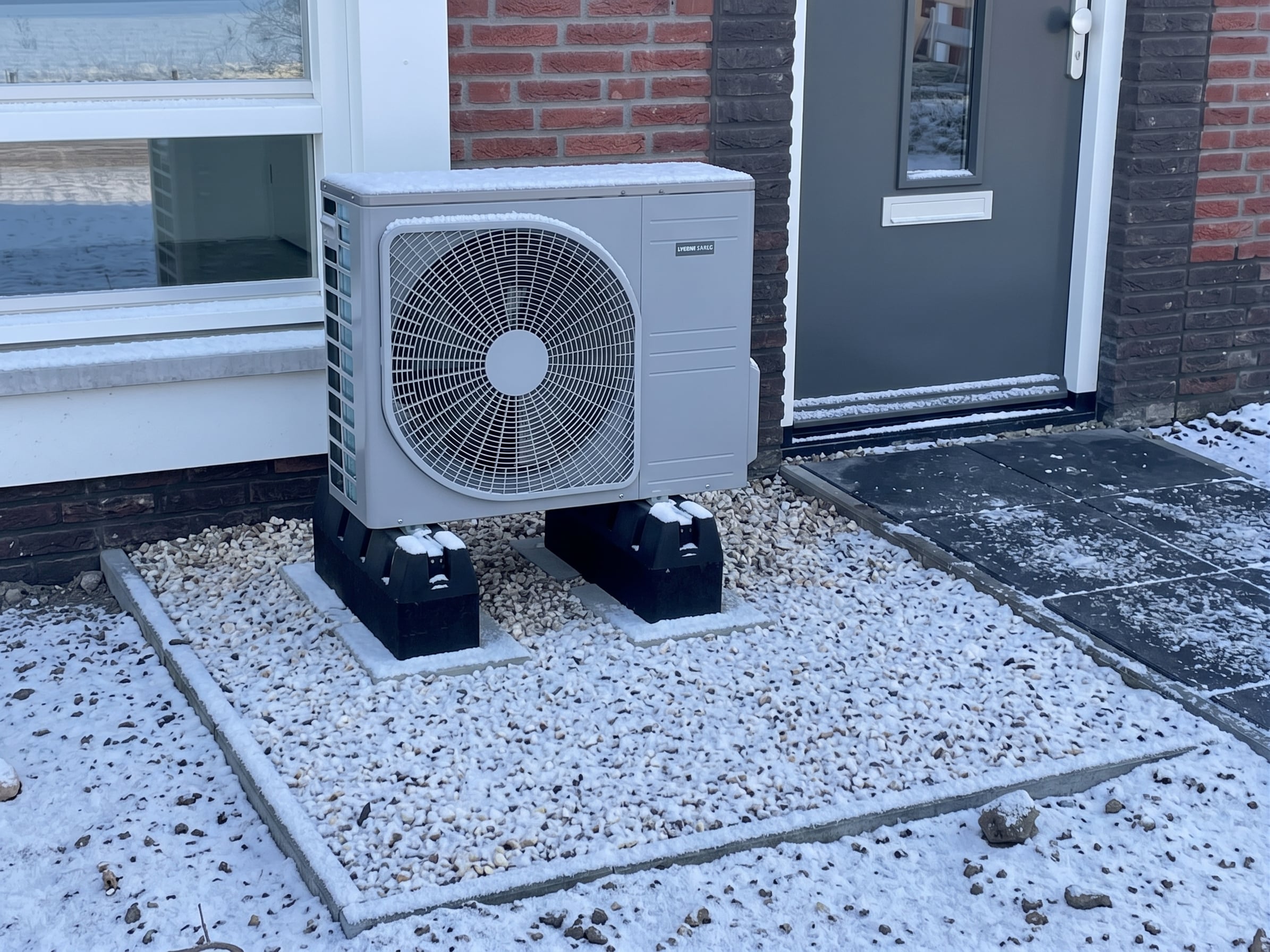
- The outdoor unit, if you have a heat pump. Clear away leaves and pine straw. Frost on the coil is normal and clears on its own; a solid block of ice is not.
- The fuel. Confirm the gas valve is open, or, for an oil furnace, that there is oil in the tank.
Give the system twenty minutes after any of these. If the house is still cold, the cause is likely one of the failures below, and all of them are things we repair every winter.
Heat pumps on a cold Triangle night
A heat pump moves heat from the outdoor air into the house, and there is less heat available to move as the temperature drops. Below about 35 degrees, the system leans on electric auxiliary heat strips, and Durham spends a fair number of nights from December through February below that line. Those strips are a common failure here because they only run in cold weather, so a strip that quit last winter goes unnoticed until the next cold snap. The other causes of a cold heat pump house are a reversing valve stuck in cooling mode, a defrost control that lets the outdoor coil freeze solid, and a low refrigerant charge. Each needs a technician with gauges and a meter, and each is a routine heat pump repair when it is caught before the compressor is harmed.
Gas furnaces that start and then stop
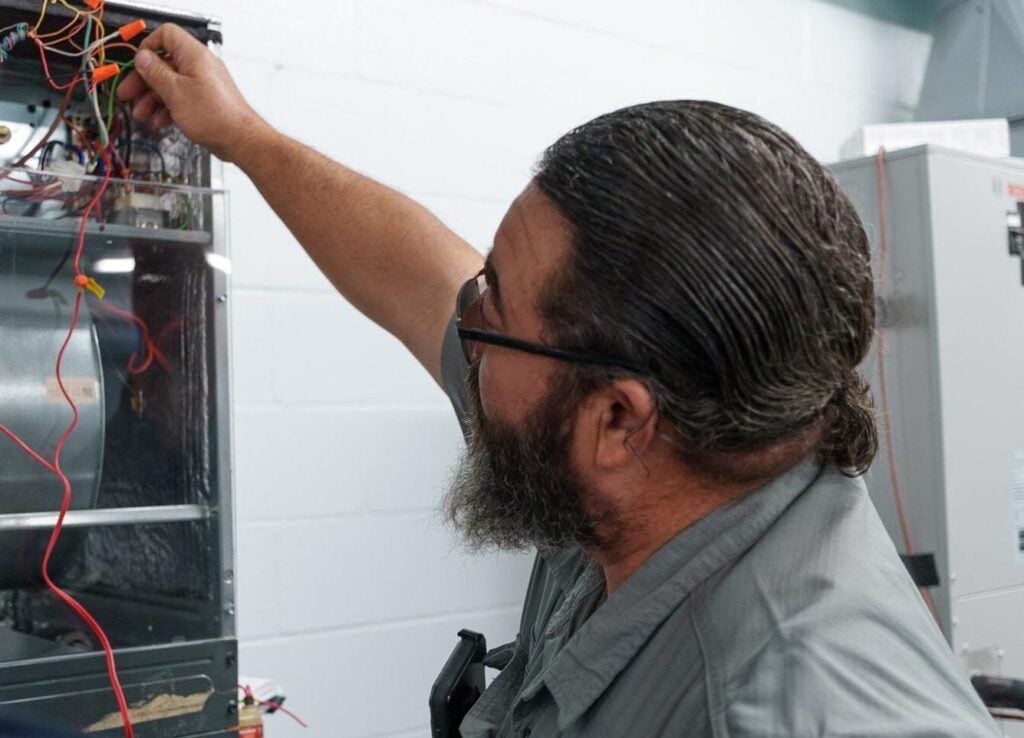
A gas furnace that lights, runs for a minute, and shuts itself down is locking out on a safety control, which is the system doing its job. The usual reason is a dirty flame sensor, a small metal rod that confirms the burners lit and cuts the gas when it cannot detect a flame. A failed igniter, a pressure switch that will not close because the vent or condensate line is blocked, and a limit switch tripping on restricted airflow produce the same start-and-stop pattern. A cracked heat exchanger is the one to take seriously. When a technician finds one, the furnace stays off until the exchanger or the furnace is replaced, because the crack can let carbon monoxide into the house which can be lethal. Our gas furnace service covers each of these.
Oil furnaces that will not fire
Oil heat is still common in older and rural Triangle homes, and it has its own list of causes. An empty tank is the first thing to rule out, and it happens to everyone eventually. After that, a clogged nozzle, a dirty fuel filter, a weak ignition transformer, or air in the fuel line will keep the burner from firing or make it fire and then cut out. You may press the reset button on the burner once. Pressing it several times pumps unburned oil into the combustion chamber, which becomes a hazard when it finally lights, so after one try it is time to call. An oil burner also needs a yearly adjustment, since one that is out of tune wastes fuel and coats the heat exchanger with soot. The oil furnace page describes that service.
Failures every system shares
Blower motors, capacitors, control boards, and contactors fail on heat pumps and furnaces alike, and any one of them stops the heat. Each is an electrical component inside the heating equipment, and each is repaired as part of heating service. The other shared cause is not in the house at all. Winter storms cut power in the Triangle in many winters, and the December 2002 ice storm kept parts of Durham dark for days. No furnace or heat pump runs without electricity. During an outage, leave the thermostat set so the system restarts when power returns, keep interior doors open so the house cools evenly, and let faucets drip if the outage runs into a freeze.
Keeping it from happening again
- Change the filter every one to three months during the heating season.
- Have the system tuned up each fall, before the first freeze, so the heat strips, flame sensor, igniter, and safety switches are tested under load.
- Treat short cycling, new noises, and rooms that no longer heat evenly as early warnings rather than quirks.
- Consider a smart thermostat that reports system faults, so a problem shows up on your phone before the house gets cold.
- If the system is past fifteen years and needs a repair costing a third of a replacement, put the money toward the replacement.
We will get the heat back on
Happy Home Services has been Durham’s trusted heating and air experts since 1955. If the checks above did not restore the heat, reach us 24/7 by phone or website chat, and we will get someone to you. Every repair comes with honest, upfront pricing with a 100% money-back guarantee, and members of the Happy Home Service VIP Club receive priority, same-day service and pay no overtime charges for after-hours or weekend calls.