
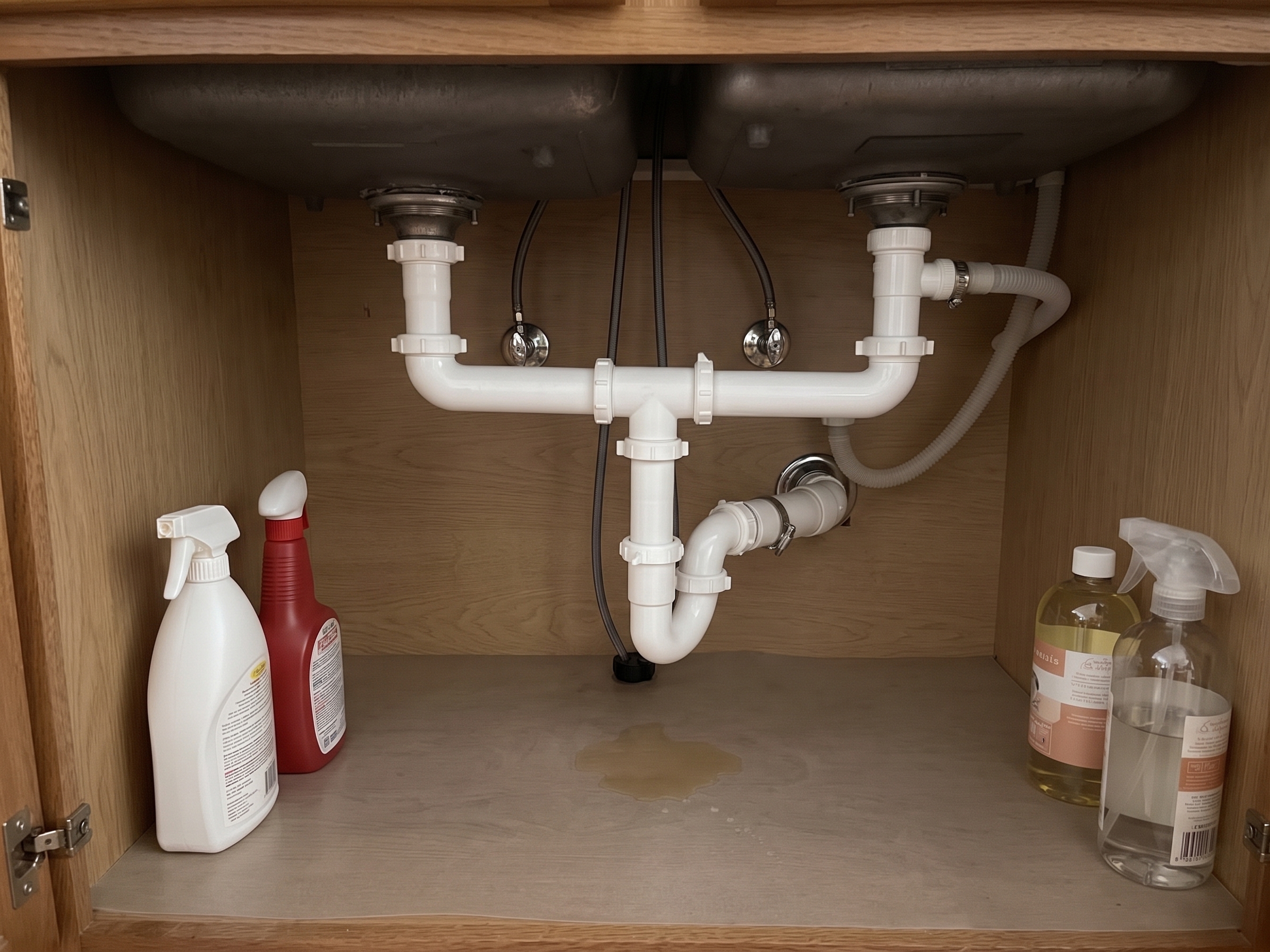
The plumbing you can see in a house is a small fraction of what is there. The rest runs inside walls, under floors, through the crawl space or the slab, and underground to the street or the well. When something goes wrong in those places, it does not show up as a puddle. It shows up as a bill, a smell, a stain, or a sound, and by then it has usually been leaking for a while. Here is where hidden problems happen in a Triangle home, the signs each location gives, and how we find a leak without taking the house apart to look.
Where leaks hide around here
Hidden plumbing problems in a Durham home tend to happen in four places. Homes over a crawl space have supply and drain lines running through a dark, damp area nobody visits, and the Piedmont’s clay floor holds whatever leaks there. Homes on a slab have supply lines in or under the concrete, where a leak saturates the soil before it shows indoors. Every home has pipe inside walls and ceilings, behind drywall, tile, and cabinets. And every home has lines underground: the water service from the meter or the well to the house, and the sewer line out to the street or the septic tank. Each leaves a different trail.
What the meter and the bill tell you
The earliest sign of a hidden supply leak is a water bill that rose with no change in the household, and the meter confirms it. Turn off every fixture and appliance, write down the reading, wait an hour or overnight, and check it again. If it moved, water is leaving the system somewhere. If it keeps moving with the main shutoff to the house closed, the leak is in the underground service line, and our water line team handles those. If the meter stops when the house is shut off, the leak is indoors. For homes on a well, a pump that cycles on when nothing is running is the same message.
Signs in the walls, floors, and ceilings
- A stain on a ceiling below a bathroom, or paint that bubbles or peels on a wall.
- Drywall that feels soft when pressed, or a baseboard that is swelling or pulling away.
- Wood flooring that cups or buckles, tile that has loosened or cracked in a line, or a soft spot in the floor.
- On a slab home, a warm spot on the floor, which is a classic sign of a hot water line leaking under the concrete.
These signs usually sit several feet from the leak itself, because water travels along framing and pipe before it soaks through, which is one reason finding the source takes equipment rather than guesswork.
What you smell or hear
A musty or earthy smell in a room, a closet, or under a sink that does not clear with cleaning means something is staying wet, and in our humidity mold takes hold in a wet wall cavity within days. A sewer smell that lingers in a bathroom, or comes and goes with the rain, points to a cracked drain line, a failed toilet seal, or a blocked vent. Water running when nothing is on, a hiss behind a wall, or a drip you can hear but cannot locate all mean water is moving where it should not be. Gurgling drains, or a toilet that bubbles when another fixture runs, point to a partial blockage somewhere you cannot see.
Signs in the yard and the crawl space
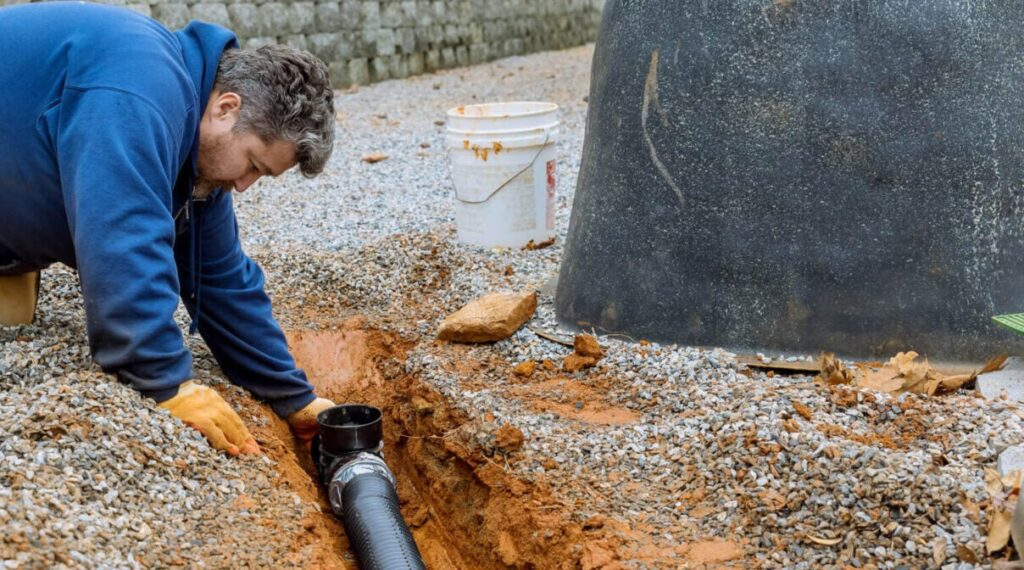
- A patch of grass greener and thicker than the rest, or a spot that stays soggy when the rest of the yard is dry.
- A low spot that has begun to sink, or a soggy area with a smell, which points to the sewer line.
- Standing water or damp soil under a specific pipe run in the crawl space.
- Rusted hangers or fittings, fallen insulation, or a musty smell at the crawl space door.
A crawl space in this area is worth a look with a flashlight twice a year, because a leak there can run for months in the dark, and clay soil keeps the moisture in place.
How we find it without opening walls
Modern leak detection is mostly listening and measuring. Acoustic equipment hears pressurized water escaping a pipe through concrete, soil, or drywall, and the technician follows the sound to the spot. Thermal imaging shows where a hot water line is leaking or where a wall cavity is wet. Pressure testing closes off sections of the system one at a time to confirm which is losing water. For drain and sewer lines, a camera inspection runs the length of the pipe and puts the crack, the root, or the separated joint on a screen. The result is a repair that opens one small area rather than a wall or a floor.
Why acting early matters here
The cost of a hidden leak is rarely the pipe. It is everything the water reached while nobody knew it was there. In the Triangle’s humidity, wet framing grows mold quickly, and a damp crawl space feeds moisture into the ducts that run through it and from there into every room. Found in the first week, a leak is a plumbing repair and nothing more. Found after a season, the same leak means drywall, flooring, framing, and remediation on top of the plumbing. If your home is showing more than one of the signs above, the inspection settles the question either way.
Let us find it
Happy Home Services has served the Triangle since 1955 with honest, upfront pricing with a 100% money-back guarantee. If you suspect a leak you cannot find, schedule online or reach us 24/7 by phone or website chat. If water is actively running, our emergency plumbing page is the fastest way to request service, and members of the Happy Home Service VIP Club pay no overtime charges for after-hours or weekend calls.