
A Durham summer is hot, and a heat wave is something more. When afternoons push into the upper 90s and the heat index passes 105 for days at a stretch, air conditioners that were coasting begin to struggle. They struggle in predictable ways. Some of the trouble is mechanical. Some of it comes from things we all do when the house is warm, with the best of intentions. This post covers both, so you know what is happening to your system and how to help it through the heat wave.
What a heat wave asks of an air conditioner
Your air conditioner moves heat from inside the house to the outdoor coil, where it is released into the outside air. The hotter that outside air, the harder the release. Systems in the Triangle are sized for design conditions in the low to mid 90s, so at 98 or 100 the equipment is working past what it was built for. Refrigerant pressures climb, the compressor runs hotter, and the system runs without pausing while holding the house a few degrees above the set point. Meanwhile the attic, where many Triangle air handlers and ducts live, is holding 130 degrees or more, and every bit of cooled air passing through it picks up heat. A healthy system in a heat wave runs all afternoon and keeps the house tolerable but a system with a weak part usually makes itself known at the worst of times.
The failures that show up in heat
The first is usually the capacitor. Heat is hard on capacitors, and one that was marginal in May quits on the first 100-degree afternoon, leaving the outdoor unit humming with the fan still. Older compressors come next, because they are running hotter and longer than at any other time of year. A system a little low on refrigerant, which was merely inefficient in June, cannot cool at all in a heat wave. Dirty condenser coils, already shedding heat poorly on an ordinary day, fall behind entirely at 100 degrees, and the compressor overheats and trips its safety. And the condensate drain, carrying gallons a day from the humid air, is at its most likely to clog and trip the float switch. Every one of these was a routine maintenance item back in spring. In a heat wave, each is an air conditioning repair call on the busiest day of the year.
Well-meant habits that make it worse
- Dropping the thermostat to 68. The system cools at one rate no matter what the set point is, so the lower setting only guarantees it never cycles off, which stresses the compressor and removes the pauses in which the coil drains and the system dehumidifies.
- Closing vents in unused rooms. Ductwork is designed for a certain airflow, and closing vents raises pressure in the system, which reduces total airflow, strains the blower, and can freeze the coil.
- Opening windows at night. A Triangle night in a heat wave is in the mid 70s with heavy humidity, and every hour the windows are open, moisture comes in that the system has to remove the next morning before it can cool anything.
- Covering or crowding the outdoor unit. Shade helps a little. A cover, a tarp, or shrubs pressed against the coil block the airflow the unit depends on.
- Running the oven and dryer at 6 p.m. Every appliance that gives off heat adds to what the air conditioner has to remove, at the hour it is already behind.
What helps instead
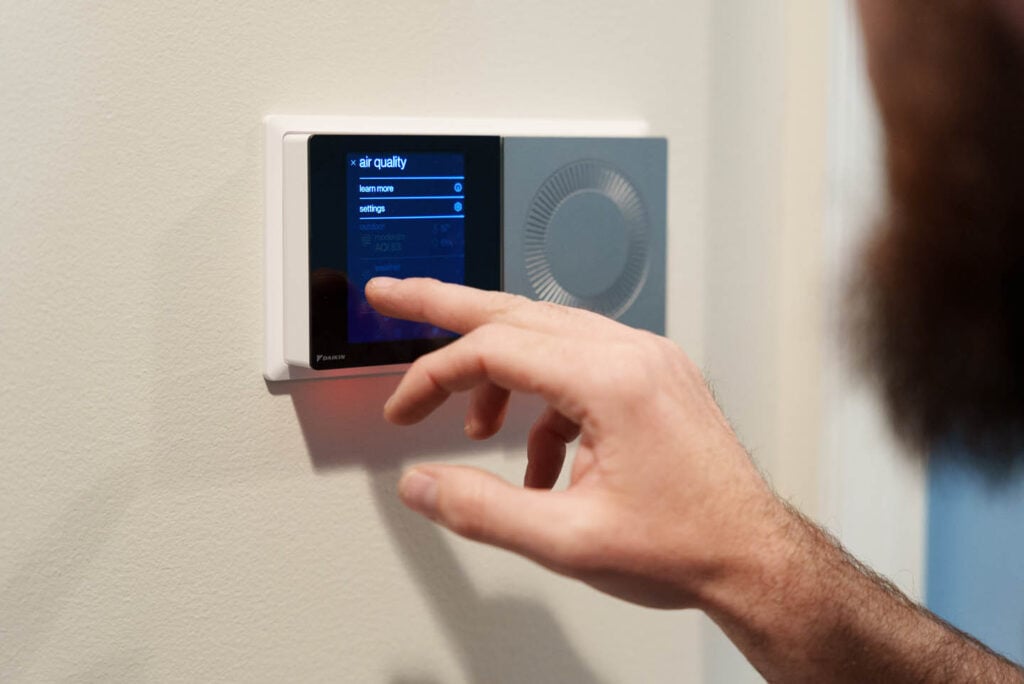
- Set the thermostat where you can live, in the mid to upper 70s, and leave it there.
- Change the filter before the heat arrives, not after the system fails. Restricted airflow is what freezes coils and overheats blowers when the system runs around the clock.
- Keep two feet clear around the outdoor unit and rinse pollen and clippings off the coil.
- Close blinds and curtains on sun-facing windows through the afternoon.
- Cook on the stovetop or outside, and run the dryer and dishwasher after dark.
- Run ceiling fans. They do not lower the temperature, but moving air feels several degrees cooler, which lets the thermostat stay higher.
Signs to act on that day
A system under stress gives warning before it quits. Air at the vents that feels cool rather than cold. Indoor humidity climbing even as the temperature holds. A new sound from the outdoor unit. Short cycling, or a system that runs for hours and loses ground. Water in the drain pan. Any of these during a heat wave is a reason to reach out that day rather than hoping it recovers, because the parts that fail in heat do not recover on their own.
The spring visit is how this gets avoided
Every mechanical failure on this list is found during a spring maintenance visit, when the capacitor is tested under load, the coils are cleaned, the charge is checked, and the drain is cleared. Happy Home Services has been Durham’s trusted heating and air experts since 1955, and our maintenance visits are built around exactly those items. Members of the Happy Home Service VIP Club receive priority, same-day service when a heat wave fills the phones and up to 25 percent off any repair. You can schedule online or reach us 24/7 by phone or website chat, and every repair carries honest, upfront pricing with a 100% money-back guarantee.