
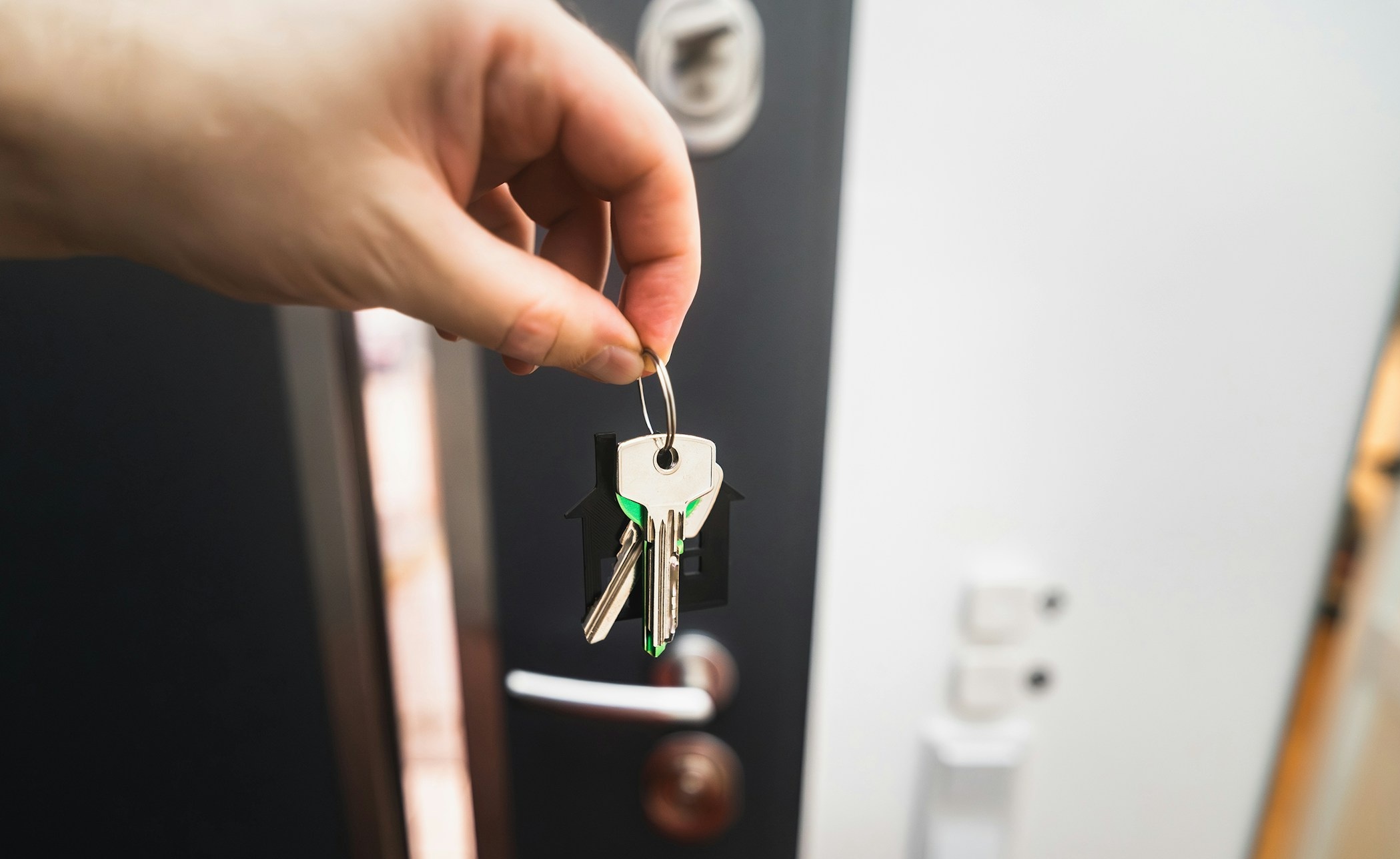
An empty house in the Triangle is not a house at rest. Three things keep working on it while you are away:
- Humidity, which the air conditioner manages every day when someone is home
- Water, which finds its way out of a weak supply line or a full crawl space whether or not anyone is there
- The power, which a summer thunderstorm can risk taking offline.
Preparing for a trip is mostly preparing for those three, and this post takes them in turn, with a note for Triangle homes on wells.
Happy Home Services has been Durham’s trusted heating and air experts since 1955. If you would like the cooling system tuned up or the sump pump tested before a trip, reach us 24/7 by phone or website chat. Members of the Happy Home Service VIP Club receive priority, same-day service, which helps when the trip is coming up quickly, and every visit comes with honest, upfront pricing with a 100% money-back guarantee.
Humidity, which never takes a vacation in North Carolina
The most common mistake before a Durham vacation is turning the air conditioning off to save money while the house is empty. In Triangle humidity, a closed house without cooling climbs into the upper 80s and the moisture settles into the floors, the furniture, and the walls, and a week of that is how a house comes to smell musty and grow mold in the closets. Raise the thermostat rather than turning the system off, to somewhere around 80 to 85 degrees, so it still runs enough to pull moisture from the air. In winter, keep it at 55 or above so the pipes stay safe. Change the filter before you leave so the system runs efficiently while it works unattended, and if the house stays damp even when you are home, a whole-home dehumidifier does the job with less cooling. With a smart thermostat, you can look in on the house from the road and bring the setting down the day before you get home.
Water, which can cause damage left alone
Water damage in an empty house compounds every hour nobody is there, which makes it the outcome most worth preventing. A supply line that lets go runs until someone finds it, and the washing machine hoses are the most common source. For a week away, turn the water heater to its vacation setting or lower the temperature, close the valves to the washing machine, and confirm the main shutoff turns so whoever checks on the house can close it if needed; for a month away, shut the main off entirely and open a faucet to drain the lines. If the house sits over a crawl space on Piedmont clay, test the sump pump by lifting the float or pouring water into the pit, since a summer storm can fill the space while you are gone, and a battery backup pump, which our sump pump team installs, keeps it running if the storm also takes the power. Run water down every drain before you go, since a dry trap lets sewer gas into the house.
Power, which a summer storm can take out
Summer thunderstorms and the occasional tropical remnant take the power in the Triangle for hours and sometimes days, and the July 2026 outage that left tens of thousands of Duke Energy customers dark is a recent reminder. An outage in an empty house does three things: the cooling stops and the humidity climbs, the sump pump stops while the storm fills the crawl space, and the power returns in flickers that are hard on the cooling system’s capacitor and board. The steps that help are modest. Unplug the television, computer, and small appliances, which takes them off the grid during restoration surges. Set the refrigerator and freezer a little colder so they hold longer if the power drops. And ask a neighbor to walk through after any storm and call if the house is warm, since a system that did not restart is a repair best made before you come home to it.
Small items before you lock the door
- Test the smoke and carbon monoxide detectors, since an alarm a neighbor can hear is the only warning an empty house has.
- Look under every sink and around the water heater for moisture, because a slow drip today is a swollen cabinet in two weeks.
- Leave the interior doors open so conditioned air reaches every room and no closet sits closed and damp.
- Tell whoever is checking the house where the water main and the breaker panel are.
If your home is on a well
Homes on wells in Durham, Orange, Person, and Alamance counties have one more thing to think about before a trip. A well pump runs only when the pressure drops, so a pump that cycles while nobody is using water is a leak announcing itself, and it is the one leak that also runs up an electric bill and wears out a pump. Before you leave, listen to the system for a few minutes with every fixture off; a pump that starts on its own is worth a well pump visit before the trip rather than after. Whoever checks on the house can do the same listening test, and if the pump is running with nothing on, they can close the main and call.
Coming home to a house that was looked after
The reward for an afternoon of preparation is an unremarkable homecoming: a house that smells the way it did when you left, dry floors under the sinks, and a cooling system that responds when you ask it to. Open the water main if it was closed, run the faucets for a minute, and lower the thermostat. If a storm passed through while you were gone, our post on what to check after the power comes back covers the walk-through, and if anything did not hold, we are glad to come look.