
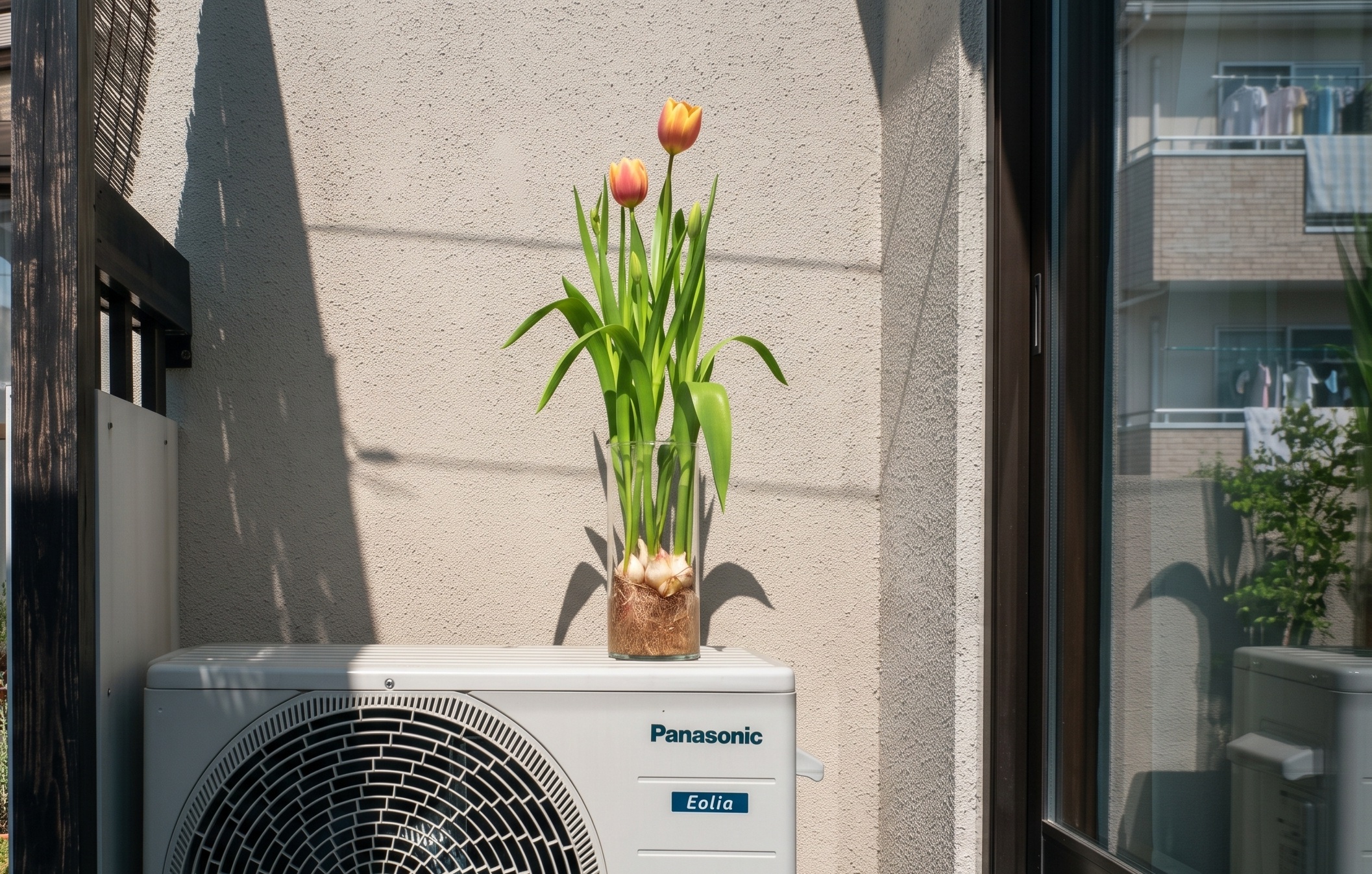
The pool bag is packed and the grill is cleaned, and the air conditioner is about to be asked to run every day until October. Whether it is ready depends a good deal on what kind of system and household you have, so rather than one list for everyone, this post offers four short ones. Find the one that describes your house, and if two apply, read both. Each takes a few minutes to work through, and each ends with what to hand to a technician before the first hot week of the season.
Heat pump households
Most Durham homes cool with a heat pump, and a heat pump has spent the winter running in the other direction. The switch to cooling is where its spring problems show. Set the thermostat to cool and five degrees below room temperature, let it run for twenty minutes, and confirm cool air at the vents; a system that heated fine and now blows warm has a reversing valve or a charge problem. Listen at the outdoor unit for a hum before the fan catches, which is a capacitor near the end of its life. And rinse the pollen off the outdoor coil, since a heat pump’s coil works twice as hard as an air conditioner’s over a year. The technician’s part is the refrigerant charge, the reversing valve, and the defrost control, none of which can be judged from the yard.
Systems past ten years
A cooling system in the Triangle lasts about 12 to 15 years with maintenance, so a system past ten is entering the years when spring readiness means something different. Pull last July’s and August’s power bills and set them beside the year before; a system costing noticeably more to run for similar weather is losing capacity. Recall whether the house felt sticky at 74 degrees, which is a system no longer running long enough to dry the air. Read the manufacture date on the nameplate. The technician’s part is a set of readings on the compressor’s current draw and the refrigerant pressures that say plainly how many summers are left, so that if a replacement is coming, you can plan it for a mild week and compare quotes rather than take what can be installed soonest in a heat wave. It is worth asking about the 10-year worry-free guarantee on a new system.
Households with allergies
Triangle pollen season overlaps with the start of the cooling season, and the air conditioner is either part of the solution or part of the problem. Replace the filter now and every month through May, and ask about a higher-grade filter, since a standard one lets through pollen an allergy household would rather it caught. Have the ducts looked at if the house feels dusty a day after cleaning, because ducts that have gone years without cleaning redistribute what has settled in them every time the system runs. And ask about a whole-home air purifier, which does what a filter cannot. The technician’s part is the indoor coil, which in Triangle humidity grows what a filter never sees, and which a spring cleaning resets.
Newcomers to the Triangle
Many people arrive in Durham for Duke, UNC, or Research Triangle Park from climates where a cooling system runs three months rather than six, and the first summer here teaches a few things quickly. Change the filter monthly during cooling season, not seasonally. Set the thermostat in the mid to upper 70s and leave it, because an air conditioner cools at one rate regardless of the number on the wall, and a setting of 68 only guarantees it never cycles off. Find the drain pan under the indoor unit and look at it once a month, since the condensate line clogs with algae every summer here and an overflow in an attic air handler comes through a ceiling. And find out what the previous owner did about maintenance, since a clean home inspection confirmed the system worked on that day and nothing more. The technician’s part is a baseline visit that documents the system’s age and condition, so you know what you own before it asks anything of you.
The part every household shares
- A fresh filter now, and a monthly check through October.
- Two feet of clearance around the outdoor unit and a gentle rinse once the heaviest pollen has passed.
- A twenty-minute test run on a warm afternoon, listening at the outdoor unit for a hum, a repeating click, or a rattle.
- A look at the drain pan and, if the air handler is in the attic, the ceiling beneath it.
- A spring maintenance visit, in April or early May, before the first heat wave fills every schedule in the region.
Ahead of the first heat wave
Happy Home Services has been Durham’s trusted heating and air experts since 1955, and our expert technicians solve the issues others can’t. If your household’s list turned up something, reach us 24/7 by phone or website chat, and the technician will confirm it, explain it, and lay out the options with honest, upfront pricing with a 100% money-back guarantee. Members of the Happy Home Service VIP Club receive priority, same-day service when the season turns.