

If you have been in your Durham home for a couple of decades, its systems have grown older alongside you. The heat pump that was new when the kids were small is fifteen. The water heater installed after the 2002 ice storm is well past ten. Nothing has necessarily failed, which is exactly why nobody has looked closely. This post covers the inspections that tell you where each major system stands and what each one finds. It also covers how to use the results to plan on your own schedule rather than the equipment’s.
Start by finding the ages
Before scheduling anything, spend a few minutes reading labels and note each age beside the system’s typical lifespan.
- Heating and cooling: the outdoor unit’s nameplate carries a manufacture date or a serial number that encodes one. Heat pumps and air conditioners last 12 to 15 years here, gas and oil furnaces 15 to 20.
- Water heater: the label on the tank. Tank heaters last 8 to 12 years, tankless units about 20.
- Well system: the install date is often on the pressure tank or in your closing paperwork. Pumps and tanks last 10 to 15 years.
- Ductwork: usually the age of the house or the last major renovation, and the hardest to judge without a look inside.
Any system near the top of its range belongs on the list that follows.
Heating and cooling evaluation
A full evaluation of an older system goes beyond a tune-up. The technician measures refrigerant pressures and temperatures to judge the compressor’s condition, tests the capacitor and motors under load, measures airflow and static pressure to see how the ductwork is holding up, and on gas or oil equipment inspects the heat exchanger for the cracks that come with age and can let carbon monoxide into the house. You get a clear picture of how much life is left and what keeping it running costs compared with replacing it. In a home that has kept up with maintenance, that picture is usually reassuring. In one that has not, the replacement decision is often closer than expected, and October is a far kinder month to learn that than July.
Plumbing assessment
Plumbing ages quietly, and a home lived in for decades has supply lines, valves, and drains that were installed once and rarely seen since. The assessment measures water pressure at the main and the fixtures, identifies the pipe material where it is visible, tests every shutoff valve, checks each drain’s flow, and inspects the crawl space for moisture and uninsulated pipe. For homes built between the late 1970s and mid 1990s, the technician looks specifically for polybutylene, a gray plastic supply pipe that fails with age and that many insurers will not cover. Where the drains have a history of repeat clogs, a camera inspection of the sewer line shows root intrusion, cracks, and separated joints before the line fails.
Water heater check
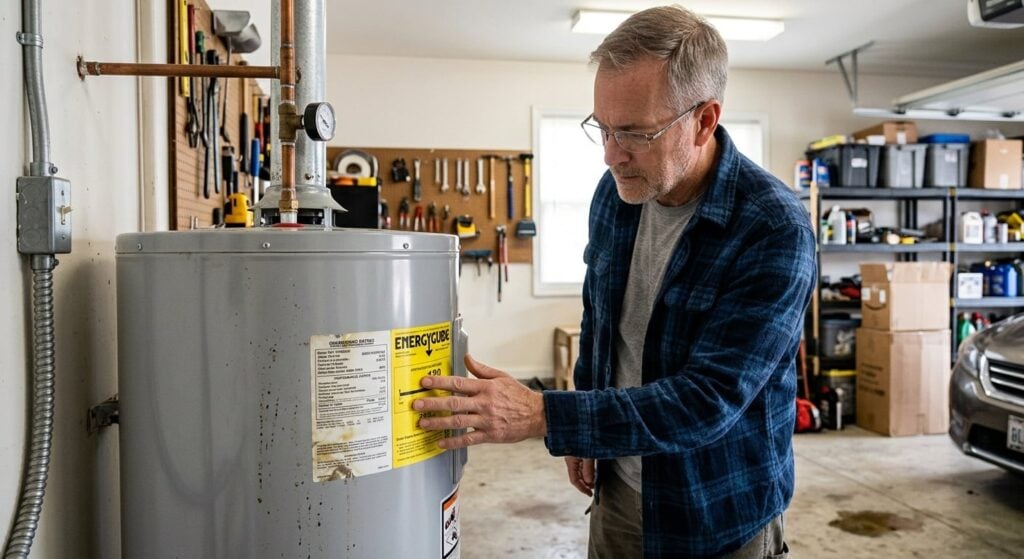
The water heater fails without warning and does the most damage when it does, especially where it sits in a crawl space or an attic. An inspection checks the age, flushes sediment, tests the relief valve, checks the anode rod that protects the tank from corrosion, and looks for the moisture at the base that means the tank has begun to fail. For a heater past ten years, the useful outcome is a plain answer about whether to replace it now or plan for it within a year or two, and a look at whether a tankless water heater suits a household whose hot water needs have changed over the years.
Well system check
If your home draws from a well, as many homes do outside the municipal systems, the well is a system that ages like any other. A check covers the pump’s cycle and run time, the pressure tank’s air charge, the pressure switch, the visible line from the well head, and the water itself, since iron and minerals in Piedmont wells affect everything downstream. A pump that runs longer than it used to is telling you where it stands, and our well pump team can tell you how long it is likely to keep going.
Ductwork and indoor air review
Ductwork ages too, living in attics that reach 130 degrees in summer and crawl spaces that stay damp on clay. Over decades, joints separate, insulation slides off, and the ducts collect dust and, where moisture reaches them, growth. A duct review measures how much conditioned air is being lost, inspects the runs by camera, and tells you whether duct cleaning, sealing, or replacement makes sense. It also considers the crawl space itself, because a damp crawl space is behind many indoor air problems in a Piedmont home, and a dehumidifier or sump pump at the source does more than any filter upstairs.
Turning the results into a plan
The value of looking at everything at once is the plan. With each system’s age and condition written down, you can see which replacement comes first, which repairs buy time, and roughly how much to set aside each year. Some homeowners use what they learn to schedule a replacement for a mild month, when there is time to compare prices. Others find out that a system they had been worrying about has years left in it. Either way, decisions get made with numbers in hand rather than in a crisis, and for a home you plan to stay in, that is worth a few appointments.
Schedule the inspections
Happy Home Services has served the Triangle since 1955. If your systems are approaching the ages above, schedule online or reach us 24/7 by phone or website chat. We will document each system’s condition and remaining life and lay out the options with honest, upfront pricing with a 100% money-back guarantee, so the plan for your home stays yours to make. Members of the Happy Home Service VIP Club receive up to 25 percent off any repair the inspections turn up.