
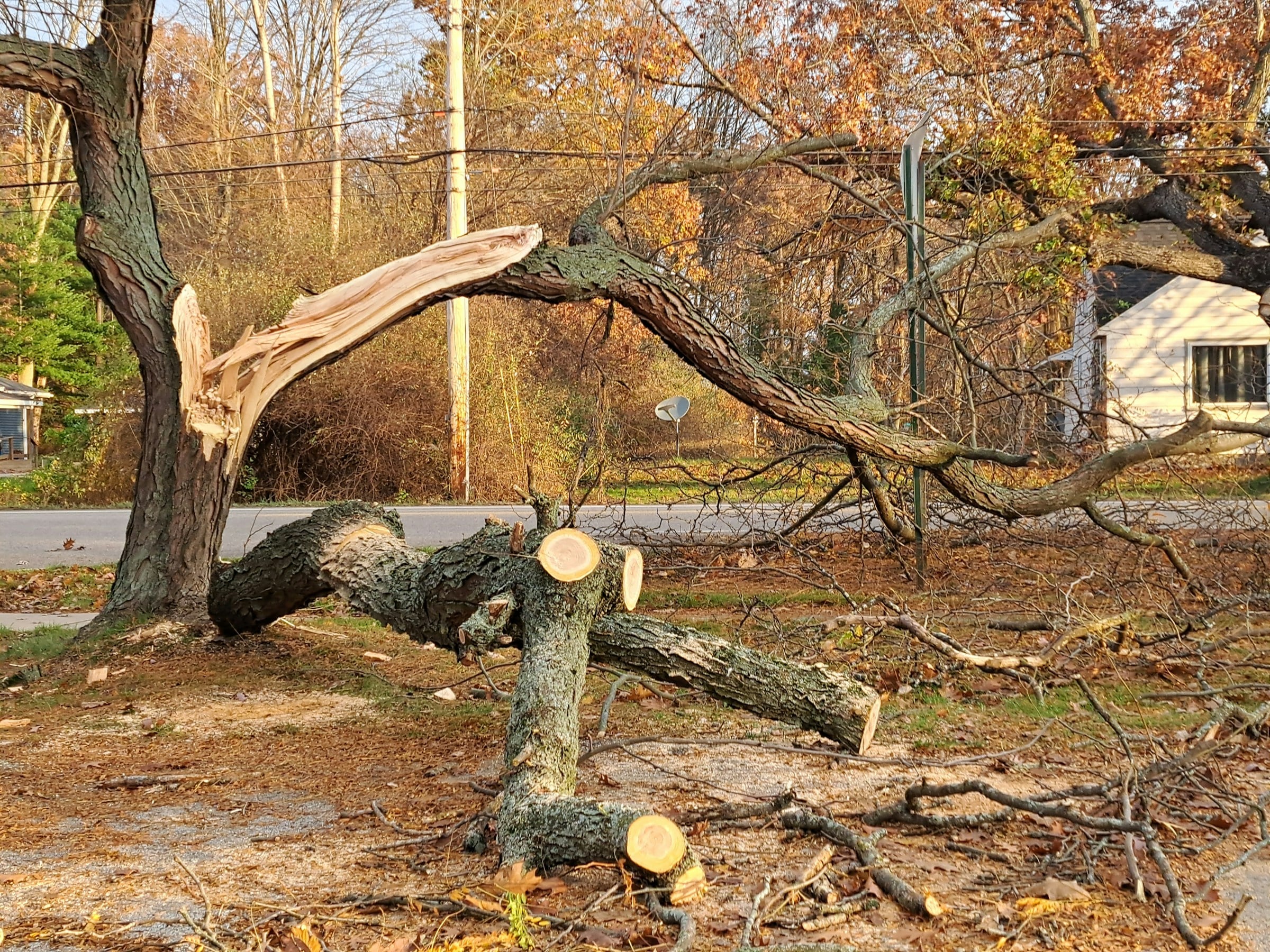
The rain has stopped and the wind has dropped, and the natural instinct after a tropical system is to get the yard cleared. That can wait an hour. The damage that costs the most after a storm in the Triangle is usually the damage nobody sees the first day. The way to find it is to walk the house from the outside in, starting at the yard and ending with the air in the bedrooms. Here is that walk, with what to look for at each stop and what belongs to a professional.
Start in the yard
Before anything else, look up. Downed lines in the yard, across the roof, or tangled in a fallen tree are the utility’s job, and a line on the ground should be treated as live. If there is any smell of gas, leave the house immediately with the door open behind you and call the gas utility from the yard. Once those are clear, walk the perimeter, note what came down, and photograph it before cleanup, since the insurance claim will want the tree on the fence and the limb on the outdoor unit as they landed. Look at the ground over the sewer and water lines for sinkholes or soft spots, which point to a shifted line.
Look at the roofline and the outdoor unit
From the ground, look at the roof for lifted or missing shingles, and remember that water which entered through the roof shows up in the attic insulation and on the ductwork before it shows on a ceiling. Then look at the outdoor heat pump or air conditioner. Wind-borne limbs bend fins, dent the cabinet, and pull the disconnect loose, all of which is repairable, and a unit that stood in floodwater needs its electrical components inspected before it runs. Do not start the system until the unit has been looked at if it was hit or submerged, since a bent fan blade or a wet contactor does damage on the first start. Photograph the water line on the cabinet if there is one.
Go under the house
The crawl space is where an inland storm does its quietest damage, because Piedmont clay pushes rainwater up from below into homes nowhere near a creek. Take a flashlight down and look for standing water, wet insulation, the water line on the piers, and mud on the ductwork. If the sump pump ran, confirm it is still running; if it did not, our sump pump team should see it before the next rain. Ductwork that took water will push mold into the house every time the system runs, and it needs cleaning or, if the insulation is soaked, replacement. A water heater or air handler in a flooded crawl space needs its gas valve, burner, or electrical components inspected before it is relit or powered.
Check the plumbing
Three plumbing problems follow a storm here. Saturated ground and overwhelmed sewers push wastewater back through the lowest drains, so a shower or floor drain that backed up during the storm should be looked at with a camera inspection for a line that shifted or cracked. A water heater that did not flood may still show moisture at its base, because pressure swings during an outage turn a slow drip into a visible one. And for homes on wells, a well head that was under floodwater can carry contamination into the house, so the water should be treated as unsafe for drinking until it has been tested and, if needed, the system disinfected; our well pump team can help with both.
Come inside and breathe
The last stop is the air. A house that was closed up through a storm and an outage, with humidity climbing and possibly water under the floor, smells different, and a musty note in the bedrooms a day or two later means moisture has reached the ducts or the framing. In Triangle humidity, mold establishes in wet material within days, so this is the finding that should not wait for the weekend. A dehumidifier helps a house that stays damp after the storm, and duct cleaning addresses what the crawl space sent upstairs. For a household with asthma or allergies, this stop matters as much as any.
What belongs to someone else
Happy Home Services handles the heating, cooling, plumbing, and indoor air on this list, and two things belong to other trades. Any panel, outlet, or wiring that was under water, and any breaker that trips again after being reset, belongs to a licensed electrician before it is used. A standby or portable generator that ran through the storm belongs to whoever services it, and a unit that ran for days needs that service before the next storm rather than at its next scheduled visit. Our technicians will tell you the same if they see either during a visit.
Sorting the calls
After a storm, everyone in the Triangle needs service at once, so knowing what is urgent helps. Water in the house, a sewer backup, a cooling system that will not start in a September heat wave, and a well that may be contaminated are reasons to call right away. A bent fin, a dented cabinet, or a filter full of storm dust can be handled at a scheduled visit. Happy Home has been Durham’s trusted heating and air experts since 1955 and worked through Fran, Floyd, Matthew, and Florence; reach us 24/7 by phone or website chat, and members of the Happy Home Service VIP Club receive priority, same-day service in the week after a storm. Whatever the storm left, the repair carries honest, upfront pricing with a 100% money-back guarantee.