
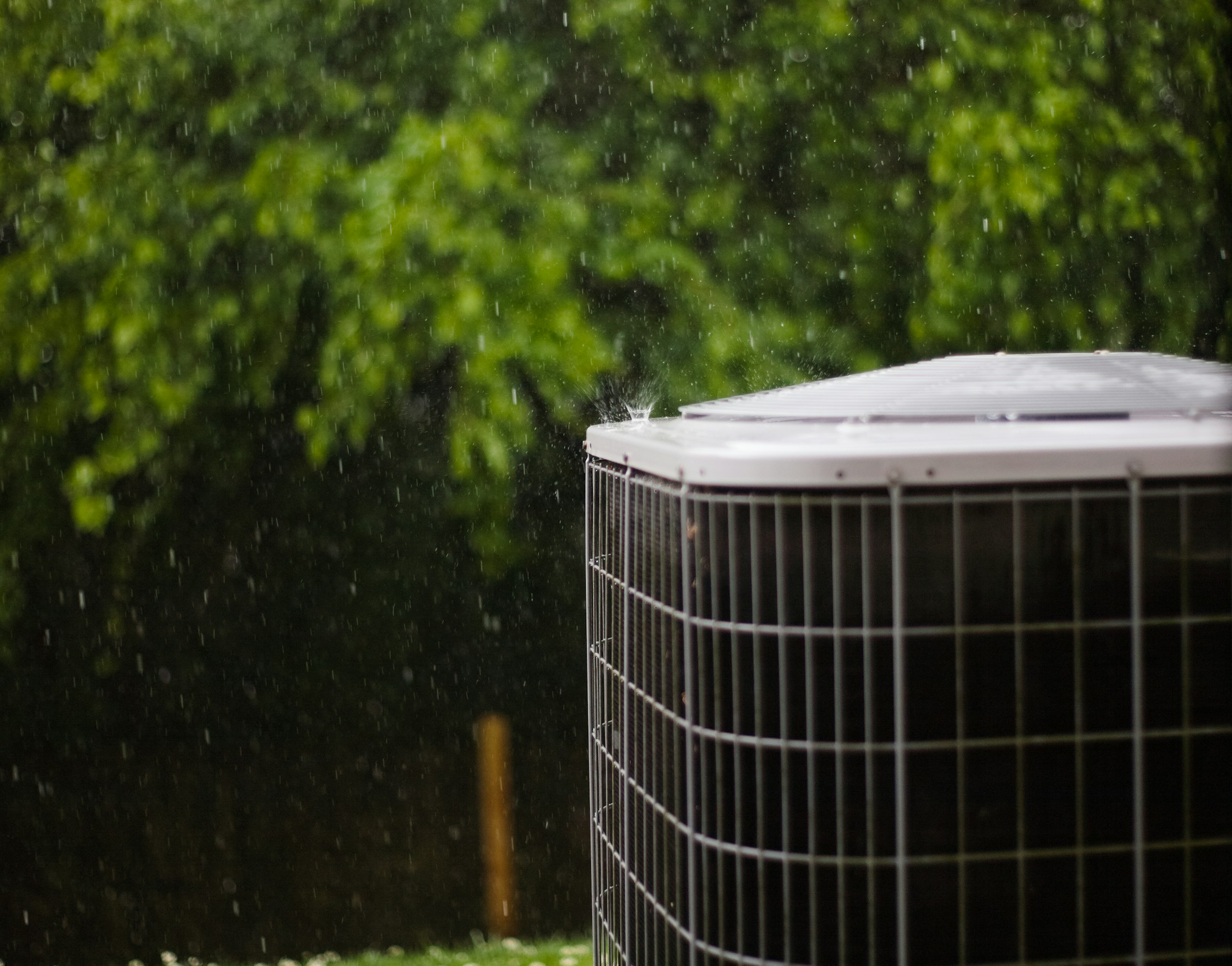
Every afternoon Summer storm carries the chance of a lightning strike on the lines that feed your street. Protection against what follows is layered and mostly inexpensive, but the layers make more sense when you can see what they are for. This post follows a single surge from a single strike through a Triangle house, stop by stop, and at each stop describes how your HVAC system and electronics are at risk and how they should be prepared.
A strike a few blocks away
Lighting can be a considerable distance away and still impact your home. It likely hits a line or a transformer several blocks over, and a spike of voltage travels down the wires into every home on the circuit at the speed of electricity. The same happens on a smaller scale when the utility reconnects the grid after an outage and the power arrives in flickers and spikes, and smaller still every time a large motor in your own house shuts off. The house takes hundreds of these a year, nearly all too small to notice and all wearing on electronics a little at a time, which wears down the lifespan of your control board.
First stop, the electrical panel
The surge arrives at the panel, which is the one place it can be stopped before it reaches anything. A whole-home surge protective device mounted at the panel intercepts the spike and sends the excess voltage to ground, protecting everything that cannot be plugged into a strip: the heat pump, the air handler, the water heater, the well pump, the sump pump, the range, and the wiring itself. A licensed electrician installs it in about an hour, an indicator shows whether it is still working, and it costs a small fraction of the compressor it protects.
Second stop, the outlets
From the panel, the surge travels down every circuit to every outlet, and what is plugged in decides what happens next. Electronics on a plain power strip take the full spike, and this is where the morning-after casualties usually happen. A surge strip with a joule rating on the label absorbs what the panel device let through, or, in a house without one, takes the first and often the only hit, and a strip that has done that has usually spent itself and should be replaced; its indicator light says so. Smart thermostats, doorbells, and garage door openers are the most sensitive devices in the house, and their failure is often the first sign a surge came through.
Third stop, the air conditioner’s disconnect
The surge also travels out to the disconnect box on the wall near the outdoor unit and into the unit itself, and here it reaches the most expensive equipment in the house. The capacitor, which gives the compressor and fan their starting push, is worn by every spike and by the repeated restarts of a messy restoration, and a failed one leaves the unit humming with the fan still. The contactor’s contacts pit and burn, and the compressor, when the power flickers back, restarts against pressure it has not released, which strains it every time. A dedicated surge protector at the disconnect adds a second layer for this equipment specifically, and the cooling tune-up tests the capacitor and contactor under load, which catches the wear before it takes the compressor. Our air conditioning repair visits after a storm begin with those readings.
Last stop, the control board
Inside the air handler, the surge reaches the control board, which takes the thermostat’s signal and decides what runs and when. A large spike burns it outright, and the system does nothing the next morning with good batteries and closed breakers. The small spikes degrade its components a little at a time, so the board fails early with no storm to blame. The furnace’s board and the refrigerator’s board are in the same position. The protection here is the layers above it: a panel device that stops the large surge, sound grounding so the device has somewhere to send it, and a tune-up that checks the board and the connections after any major outage.
Grounding, underneath all of it
Every protector in the story works by sending excess voltage to ground, and it can only do that if the home’s grounding is sound. Older Durham homes sometimes have grounding that was adequate when installed and has corroded since, and a protector on a poorly grounded system has nowhere to send the surge, so an electrician confirms the grounding when installing the panel device.
Stopping the next storm’s surge
- Ask a licensed electrician about surge protection and about the grounding in an older home.
- Put every electronic device that matters on a surge strip with a joule rating, and replace strips that have taken a hit.
- Ask about a dedicated protector at the outdoor unit’s disconnect during the next tune-up.
- During a storm, unplug what you can, and after an outage give the cooling system a few minutes before judging it.
- Schedule a tune-up in the weeks after a major outage so the capacitor, contactor, and board are checked before the next heat wave reveals what the restoration did.
Our side of the story
Happy Home has been Durham’s trusted heating and air experts since 1955. If a storm has left your cooling system humming, running without cooling, or dead at the thermostat, or if you would like the system checked after an outage, reach us 24/7 by phone or website chat. Members of the Happy Home Service VIP Club receive up to 25 percent off repairs, with a triple labor warranty behind the work.