

Told Your AC Just Needs Refrigerant? Ask These Questions
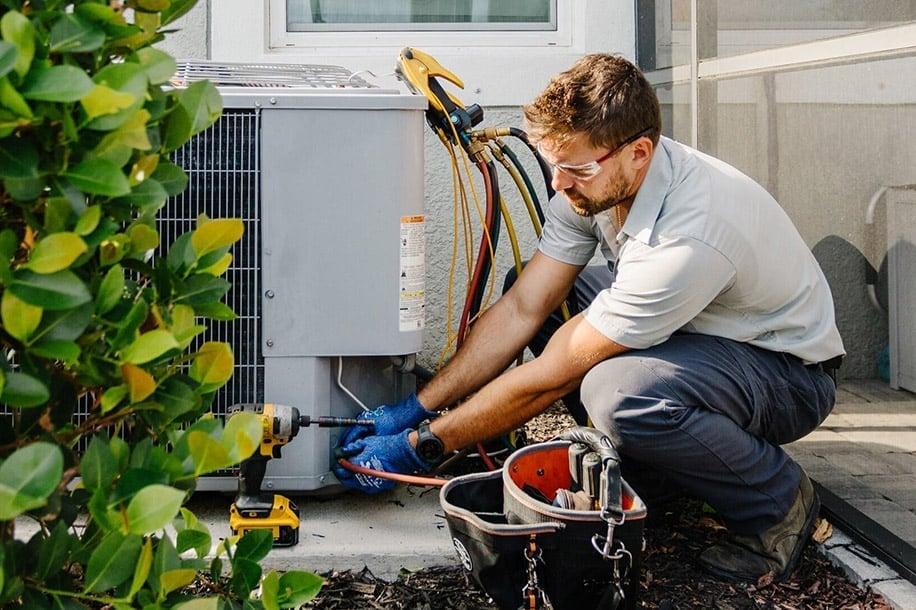
If a technician has told you your air conditioner just needs refrigerant, the right response is a few questions, because refrigerant does not get used up. It circulates in a sealed loop, so a system that is low has a leak, and adding refrigerant without finding and repairing that leak buys a few weeks or months before the same warm air returns. The questions to ask are where the leak is, how much refrigerant the system needed, whether the leak will be repaired before the recharge, and what the technician found when they searched for it. A recharge with good answers to those questions is a repair. A recharge without them is a temporary patch sold as a fix.
Many of the second opinions Happy Home provides across Durham and the Triangle start with exactly this conversation. Here is what the questions mean and what a complete repair involves.
Where Is the Leak?
A technician who has diagnosed a low charge should be able to say where the refrigerant is escaping, or to say that the leak search is the next step. Common leak points are the evaporator coil, where years of condensation corrode thin tubing, the brazed joints on the refrigerant lines, the service valves on the outdoor unit, and spots where a line rubs against a bracket. Finding the leak takes electronic detectors, ultraviolet dye, or a nitrogen pressure test. An answer of “somewhere” means the search was not done.
How Much Did It Need?
A residential system holds a specific charge listed on its data plate, and the amount added tells you the leak rate. A system that needed a few ounces after ten years has a very slow leak. A system that needed several pounds after one summer has a fast one, and recharging it is paying for refrigerant that will be in the atmosphere by August. The second case is a repair-or-replace conversation, not a top-off.
Will the Leak Be Repaired Before the Recharge?
This is the question that separates a repair from a patch. Federal law under Section 608 of the Clean Air Act limits refrigerant handling to certified technicians and prohibits knowingly venting it, and the standard a conscientious technician follows is to repair the leak, pressure test the system, evacuate it to remove the moisture and air that entered through the leak, and then recharge by weight to the manufacturer’s specification. Moisture in the loop reacts with the refrigerant oil to form acids that attack the compressor from inside, which is a second reason an open leak is more than a performance problem.
Why a Top-Off Fails Faster in Durham
The cooling season in the Triangle runs from late May through September, and the system logs more hours in those months than most of the country’s systems log all year. A slow leak that would last two summers in a cooler climate empties a Durham system in one. The energy penalty is longer too: a system running low works harder for the same cooling for the entire season, and the compressor runs hotter because it is starved of the cool refrigerant vapor it depends on. Each top-off costs the same as the last and lasts about as long.
What the Refrigerant Itself Costs
Systems installed before 2010 usually run on R-22, which the EPA stopped allowing to be produced or imported in 2020, so every ounce comes from a shrinking reclaimed supply at a rising price. Systems from 2010 through 2024 almost always use R-410A, and an EPA phasedown that began in 2025 moved new residential equipment to lower-impact refrigerants such as R-454B and R-32. R-410A remains available, but its cost rises as production falls, which makes a leak topped off twice a summer more expensive every year it continues.
When Replacement Is the Honest Answer
A leaking evaporator coil on a system past ten or twelve years is the point where a repair and a replacement cost enough alike that the decision deserves both quotes side by side. A new coil has to match the refrigerant the old system uses, and the rest of the equipment keeps aging around it. A new system runs on a current refrigerant, carries a full warranty, and uses less electricity through a long Triangle cooling season, and financing options are available. Our technicians present both numbers with honest, upfront pricing and let you choose.
What a Complete Repair Looks Like
- A leak search with electronic detection, dye, or a nitrogen pressure test.
- A repair of the leak itself: a tightened valve, a re-brazed joint, or a replaced coil.
- A pressure test to confirm the repair holds.
- Evacuation of the system to remove moisture and air.
- A recharge by weight to the manufacturer’s specification.
- A performance check of the temperature drop across the coil.
Getting a Second Opinion
Happy Home Services has been Durham’s trusted heating and air experts since 1955, and our technicians are the ones homeowners call when another company’s fix did not hold. Every technician is background-checked and trained to find the leak before anyone adds refrigerant, and you hear the findings and the price before any air conditioning repair begins. Schedule online any time or reach our team through 24/7 website chat, and we will fix the leak, not just the symptom.
Frequently Asked Questions
What questions should I ask if a technician suggests just adding refrigerant?
Ask where the leak is, how much refrigerant the system needed, whether the leak will be repaired and the system pressure tested before the recharge, and what refrigerant the system uses. Clear answers mean a repair is being done. Vague answers mean a top-off is being sold as one.
Why did my system need refrigerant two summers in a row?
Because the leak was never repaired. Refrigerant leaves only through a leak, and a system recharged without a repair loses the new charge at the same rate as the old one. A leak search and repair ends the pattern, and on an older system the search often shows whether the coil is the problem.
Can the leak be in the line set inside the wall?
Yes, though it is less common than a coil or valve leak. Line sets run through walls, crawl spaces, and attics, and a rubbed-through spot or a bad joint can sit out of sight. A nitrogen pressure test isolates the line set, and if it is the source, replacing or rerouting the line set is often simpler than opening the wall.
What is a nitrogen pressure test?
The technician recovers the remaining refrigerant, fills the system with dry nitrogen to a test pressure, and watches a gauge over time. A pressure drop confirms a leak, and soap solution or an electronic detector at the joints finds it. The test also proves a repair holds before any refrigerant goes back in.
Does it matter which refrigerant a new system uses?
Yes. New systems manufactured since 2025 use lower-impact refrigerants, and a system installed today on an older refrigerant will face rising service costs sooner. Ask which refrigerant any proposed replacement uses and whether it is current. Your technician should be able to explain the difference plainly.