

Return Air Ducts in Older North Carolina Homes: The Single Central Return and How to Fix It
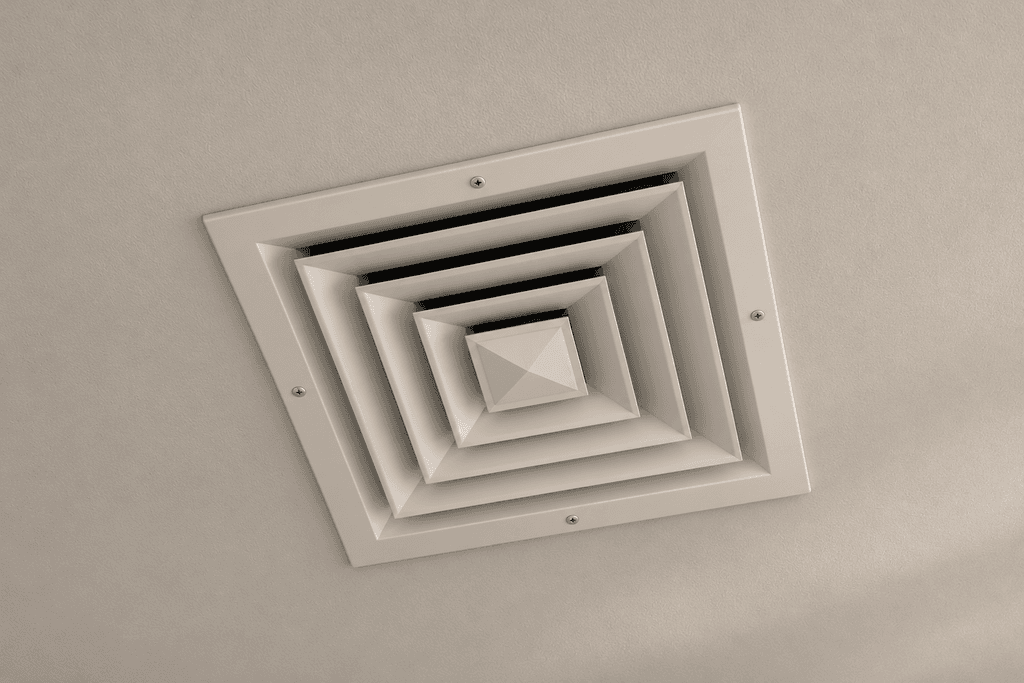
Return air ducts pull air out of the rooms and carry it back to the air handler, where it passes through the filter and over the coil or heat exchanger before heading out again through the supply ducts. Many older Durham homes rely on a single return grille in a central hallway to do that for the whole house, and it works only as long as air can get from every room back to that hallway. Close a bedroom door and the path is cut, the room goes stuffy by morning, and the system moves less air than it was built to. The fixes are a return path for each room, through a transfer grille, a jumper duct, or an added return, and sealing the return side so it pulls from the rooms rather than from the attic or crawl space.
Durham’s housing from the 1920s through the 1970s, from the bungalows of Trinity Park and Watts-Hillandale to the ranches of Hope Valley and the mill houses of East and West Durham, was often ducted with one return per floor when central air was added, and that choice shapes how those homes feel today.
How the Loop Works
The blower handles two tasks simultaneously. It pushes conditioned air out through the supply ducts to the registers in each room, and it pulls room air back through the returns to replace it. Returning air crosses the filter first, which is why a dirty filter affects the whole house, and in cooling mode the coil pulls humidity out of that returning air, so the return side has a direct hand in how dry a Triangle house feels in August. The amount of air pulled back has to match the amount pushed out, and when it does not, pressure builds in the wrong places.
The Single Central Return
With one return in the hallway, every room’s air has to travel to the hallway to get back to the system. An open door is a wide path. A closed door leaves a gap at the bottom that moves a fraction of the air the room receives, so the room builds slight positive pressure, pushes conditioned air out through gaps around windows and outlets, and receives less supply air because the system cannot deliver more than it can pull back. By morning the bedroom is stuffy, a few degrees off the rest of the house, and more humid in summer. The hallway, meanwhile, pulls hard on whatever air it can reach, including air from a crawl space through gaps in the floor.
Three Fixes, From Simplest to Most Complete
A transfer grille is a louvered opening installed through the wall above a bedroom door, or a pair of offset grilles in the wall, that lets air move from the room to the hallway with the door closed while keeping light and most sound out. It is the simplest fix and suits most bedrooms.
A jumper duct is a short run of flex duct in the attic or ceiling connecting a grille in the bedroom ceiling to a grille in the hallway ceiling, which gives the room a return path with better sound privacy than a wall grille. It suits bedrooms where the wall above the door is not available.
A dedicated return is a new return grille in the room with a duct back to the return trunk, which gives the room its own balanced path and is the most complete fix, especially for a large primary bedroom, a bonus room, or an addition. Our duct installation team handles all three.
The Return That Pulls From the Wrong Place
Older homes also have return ducts built from the house itself: floor joist bays or wall cavities closed off with sheet metal and used as ducts, called panned returns. They were rarely sealed, and every gap pulls air from the crawl space or the wall cavity into the system along with moisture, dust, and musty air. A return trunk in an attic with a loose joint does the same with hot attic air in summer. Sealing those returns is often the single most noticeable improvement in an older home’s air, because the system stops distributing what it should be filtering out.
Signs the Return Side Is the Problem
- Bedrooms that go stuffy or off-temperature behind closed doors.
- Doors that drift shut, pull open, or whistle whenever the blower is on.
- Weak airflow at supply registers with a clean filter.
- A summer coil freeze, because low airflow lets the coil drop below freezing.
- A furnace that shuts down on its high-limit switch in winter.
- A musty smell when the system starts, which points to a return pulling crawl space air.
- Dust that collects faster than it used to.
Measuring Rather Than Guessing
A technician measures static pressure, the resistance the blower works against, at the air handler, and that number tells whether the return side is undersized, blocked, or leaking before anyone opens a wall. The measurement also shows whether a system replacement sized larger than the original equipment outgrew the returns, which is common when a 1990s system is replaced with today’s equipment and the ductwork is left alone. A duct inspection covers the measurement, the leak search, and the recommendation.
Getting Your Home Breathing
Happy Home Services has been Durham’s trusted heating and air experts since 1955, and our technicians know the ductwork of Durham’s older homes because they have been working in it for seventy years. Comfort problems other companies tried to solve with a bigger system are often return problems, and you get honest, upfront pricing for the fix once the measurement names it. Schedule a duct evaluation online any time or reach our team through 24/7 website chat, and we will help your system move air the way it was meant to.
Frequently Asked Questions
What is a jumper duct?
A jumper duct is a short run of flexible duct in the attic or ceiling space that connects a grille in a bedroom ceiling to a grille in a nearby hallway ceiling, giving the room a path for air to return to the central return with the door closed. It carries no conditioned air and connects to no equipment. It is a quieter alternative to a transfer grille through the wall.
Why does my hallway return grille rattle?
The grille’s louvers or its frame are vibrating in the airflow, usually because the grille is undersized for the amount of air the blower pulls through it, the screws have loosened, or a filter inside it is loose. A larger grille or a second return lowers the air velocity and the noise. Tightening the frame is the quick fix.
Can a return be installed in a closet?
A return in a closet pulls air from the closet rather than the room, which does little for comfort, and a closet that houses a gas water heater or furnace must never have a return in it because the negative pressure can pull combustion gases back into the house. Returns belong in the room’s living space, high or low on a wall or in the ceiling.
Why does only one bedroom in my house have a return?
In many older homes the primary bedroom received a return when central air was added or during a renovation, and the smaller bedrooms were left to the central return. The room with the return usually feels the most comfortable in the house, which is the clearest demonstration of what the other rooms are missing.
How much difference does adding a return path make?
In a bedroom that goes stuffy behind a closed door, a transfer grille or jumper duct usually brings the room within a degree or two of the rest of the house and noticeably less humid in summer, because the supply air can now reach it at full volume. Across the house, a balanced return side lowers static pressure, which lets the blower move its designed airflow and often quiets the system.