

Is It Your Thermostat or Equipment Failing Your HVAC System? A Decision Guide
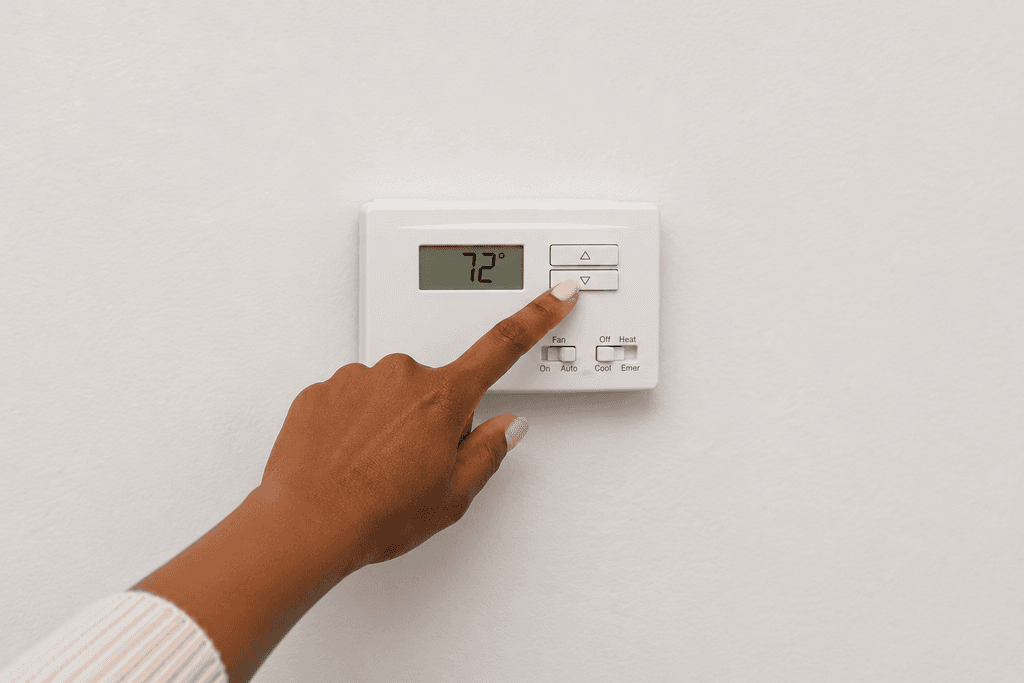
When a heating and cooling system misbehaves, the first question is whether the thermostat or the equipment is at fault, and the answer decides whether the fix costs a battery or a service call. The guide below works through the four most common complaints, a system that will not start, a system that runs without stopping, a system that short-cycles, and a heat pump that runs its backup heat in mild weather, and for each one it tells you what points to the thermostat, what points to the equipment, and what to check to find out.
A thermostat does three things: it reads the room, it holds the settings you give it, and it tells the equipment when to start and stop. Every complaint traces to one of those three jobs or to the equipment the thermostat is talking to.
If Nothing Starts
If the thermostat points to the equipment, the display changes when you adjust the setting, you hear a click, and the indoor blower starts, but the outdoor unit or the burners never do. The thermostat has sent the call. The fault is a tripped breaker on the outdoor unit, a failed capacitor, a safety switch such as a float switch in a full drain pan, or a component in the equipment.
If the equipment points to the thermostat, nothing anywhere responds. Check the batteries, the breakers for the indoor unit, and the power switch on or near the air handler. If those are fine and the display is dim, blank, or unresponsive, the thermostat has lost power or failed. If the display works but no click follows a setting change, the thermostat’s relay or its wiring is the problem.
If It Runs Without Stopping
The thermostat is the cause when the house is well past the setpoint and the system keeps running. A stuck relay or a wiring fault keeps the call active. Confirm the setpoint is where you think it is and the fan is not simply set to On, then switch the system off at the thermostat. If the equipment keeps running anyway, turn it off at the breaker until a technician can look, because a furnace that never stops can overheat and an air conditioner that never stops can freeze.
The equipment is the cause when the system runs constantly and never reaches the setpoint. It is doing what the thermostat asks and failing to deliver, because of a refrigerant leak, a failing component, leaky ducts losing the output to the attic, or a system undersized for a house that has grown.
If It Short-Cycles
The thermostat is the cause when it is mounted in direct sunlight, next to a supply register, on a wall warmed by a nearby kitchen, or in a hallway that runs warmer or cooler than the house. It satisfies early and shuts the system down before the rooms are comfortable. A thermometer placed beside the thermostat for fifteen minutes shows whether it is reading the room correctly, and a reading that disagrees with the rest of the house by several degrees points to location or a drifting sensor.
The equipment is the cause when a safety switch is cutting the cycle short: a furnace overheating because of a clogged filter and shutting down on its high-limit switch, an air conditioner with a frozen coil, or a system too large for the house that satisfies the thermostat in a few minutes and leaves the home humid. Because the two look identical from the display, a technician checks the equipment first, since those causes do damage if ignored.
Your Heat Pump Is Struggling Through Mild Weather
This one is nearly always a thermostat setup problem rather than a failure, and in the Triangle, where heat pumps are the most common heating system and winters are cold enough to use the backup strips, it is the most expensive one to ignore. The strips cost several times more per hour than the heat pump. A thermostat that is not configured for a heat pump, that has its balance point set too high, or that is asked to jump five degrees at a time calls for the strips when the heat pump alone would do. Aux Heat on a 45-degree afternoon is the sign. The fix is configuration, or a smart thermostat built for heat pumps that manages the strips on its own.
Three Quick Tests That Settle Most Cases
- The thermometer test: compare the thermostat’s reading with a separate thermometer beside it for fifteen minutes.
- The response test: set the thermostat five degrees past the room temperature and listen for the click, the blower, and the outdoor unit.
- The hold test: set a temperature and check the next morning whether it held, since a thermostat that drifts or loses its program is failing.
When to Replace the Thermostat
A thermostat that fails the thermometer test or the hold test is usually replaced rather than repaired, because a new one costs less than diagnosing an old one and a digital thermostat’s sensors drift after about ten years. If you are replacing it anyway, a smart model adds a schedule that runs itself, remote control, filter and runtime alerts, and, on a heat pump, the backup heat management that keeps winter bills down. Setup is where that value lives, which is why the configuration belongs to a technician.
Getting a Clear Answer
Happy Home Services has been Durham’s trusted heating and air experts since 1955, and our technicians test the thermostat, the control wiring, and the equipment it talks to before anyone replaces a part, which is how a complaint that stumped another company usually gets solved. You get honest, upfront pricing before any work begins, and members of our Happy Home Service VIP Club receive an extended labor warranty on repairs. Schedule online any time or reach our team through 24/7 website chat, and we will find out which part of the system is misbehaving.
Frequently Asked Questions
Why does my thermostat run the fan constantly even on Auto?
A thermostat that runs the fan on Auto with no heating or cooling call usually has a wiring fault, a stuck fan relay, or a setting such as circulate mode that runs the fan periodically by design. Check the fan settings menu first. If nothing explains it, the relay or the wiring is the fault, and a technician can confirm which.
Is it safe to turn the thermostat off completely when I leave for a week in winter?
Not in Durham. A house with no heat during a hard freeze can see pipes in exterior walls and the crawl space drop below freezing, as many Triangle homeowners learned during the Christmas 2022 cold snap. Set the thermostat to 55 degrees or so instead, and shut off the main water valve for a long trip.
Why do two thermostats in my house disagree with each other?
Each reads the air at its own wall, and a two-story home or a zoned system can legitimately show different numbers upstairs and downstairs. A gap of several degrees between two thermostats on the same floor points to a sensor drifting or a location problem at one of them. Calibration or relocation solves it.
What does Recovery mean on my thermostat display?
Recovery means the thermostat has started heating or cooling early so the house reaches the next scheduled temperature on time, rather than starting at the scheduled moment. It is a feature of programmable and smart thermostats, not a fault. On a heat pump, a good recovery setting also avoids triggering the backup strips.
How do I know if my thermostat is made for a heat pump?
A heat pump thermostat has settings or wiring terminals for the reversing valve and for auxiliary or emergency heat, usually labeled O/B, AUX, or E, and its menu lets you choose heat pump as the system type. A conventional thermostat wired to a heat pump may run the backup strips constantly or fail to switch between heating and cooling. The label inside the cover or the manual confirms it.